Bitcoin's Bull Run: Retail vs Institutional Capital
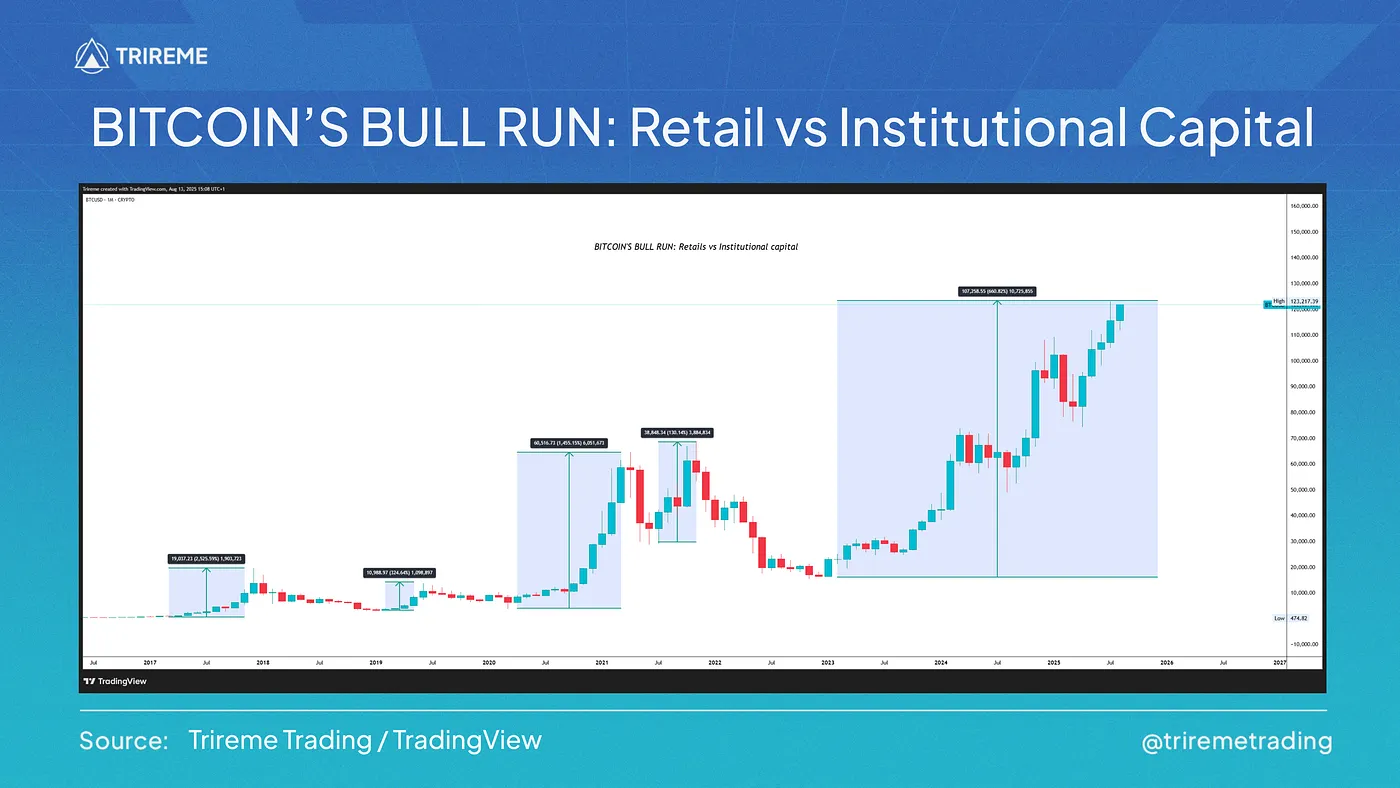
This Bitcoin rally is structurally different from previous cycles.
In 2013, 2017, and even 2021, retail FOMO was the dominant force.
- 2013 Cycle — 9,325% gain
Driven by early retail adoption and speculative mania. No institutional presence, highly volatile drawdowns.
2. 2017 Cycle — 1,925% gain
Fueled by ICO boom and retail FOMO. Infrastructure was immature, liquidity shallow. Regulatory uncertainty led to a brutal reset.
3. 2021 Cycle — 1,374% gain + mid-cycle rally of 723%
Institutional interest emerged (Tesla, MicroStrategy, PayPal integration), but no deep capital flows yet. Heavy reliance on retail and high leverage, ending with cascading liquidations.
Now, ETF inflows, sovereign funds, and regulated custodians are driving sustained bid pressure.
4. 2024–2025 Cycle — ~664% so far (and still active)
Key Difference: This rally is institutionally funded. Spot Bitcoin ETFs, sovereign fund allocations, and regulated onramps have provided deep liquidity.
Price action is more sustained, with fewer extreme drawdowns between legs.
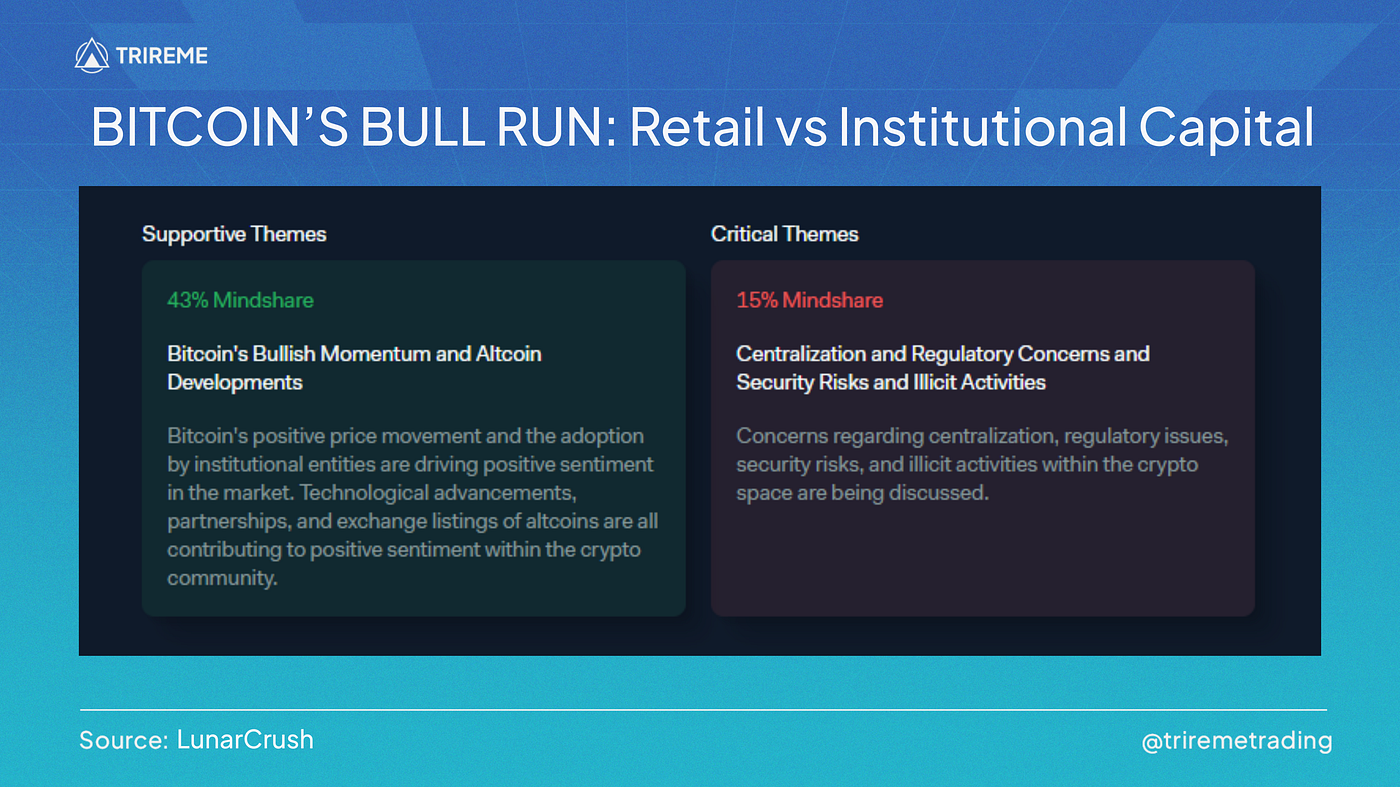
Pros of Institutional Involvement:
1. Institutions absorb large sell orders without breaking structure.
2. Institutional treasuries and ETFs tend to hold through volatility, taking profits on multi-year horizons instead of chasing short-term swings.
3. Regulated products make Bitcoin a viable treasury asset for corporates and funds.
4. Infrastructure Growth: Institutional demand forces better custody, settlement, and compliance rails.
Cons and Risks:
1. Centralization — Custody concentration in a few ETF issuers or service providers
2. Regulatory Capture — Over compliance risks eroding Bitcoin’s open access ethos.
3. Narrative Drift — A shift from cypherpunk decentralization toward Wall Street-friendly Bitcoin.
But this is 2025.
Why balanced regulations matter now
Without clear frameworks, large capital pools remain sidelined.
Smart regulation can:
- Reduces fraud and protects investor confidence
- Opens doors for pension funds, insurers, and sovereign capital
- Establishes competitive advantage for jurisdictions embracing compliant innovation
The challenge now: Build guardrails without turning Bitcoin into just another centralized asset.
Retail vs Institutional Behavior:
• Retail: Often driven by hype cycles, taking profits too early or holding too long without risk management.
• Institutions: Accumulate during low-volatility phases, hold through noise, and take profits strategically over multiple years. Their slower, deliberate profit-taking supports price stability compared to retail boom-bust dynamics.
Takeaways:
This is the first Bitcoin cycle where institutional capital is the foundation, not the exit liquidity.
That changes everything:
- Regulatory narratives deciding the winners in both Bitcoin and altcoin markets
- Stronger rallies
- The biggest opportunity may be spotting where this institutional money flows after Bitcoin — whether that’s into Ethereum, DeFi, RWAs, or other ecosystems.
Question for you:
If institutional capital keeps smoothing volatility and extending market cycles… is the classic 4-year Bitcoin cycle officially dead?
At Trireme, we work with founders, protocols, and institutional investors to navigate exactly these shifts in market structure.
From Bitcoin’s evolving cycles to the capital flows shaping the next sector rotation, our team specializes in liquidity strategy, market positioning, and institutional growth frameworks.
📈 If you’re building or scaling in this market, you can’t afford to be on the sidelines.
Tap into our insights, execution experience, and global network.
Follow us on X for daily market updates and capital flow insights.