Bittensor and the Rise of Decentralized AI Infrastructure
Hyperscaler capex has never been larger. NVIDIA has never been more dominant. And the case for Bittensor has never been stronger.
Here is why the AI infrastructure arms race is the best argument for an open intelligence market
And why the Bittensor ecosystem's expansion into Base liquidity is the network effect that changes everything.
The Hyperscaler AI CapEx Supercycle ($725B, NVIDIA $215.9B FY2026)
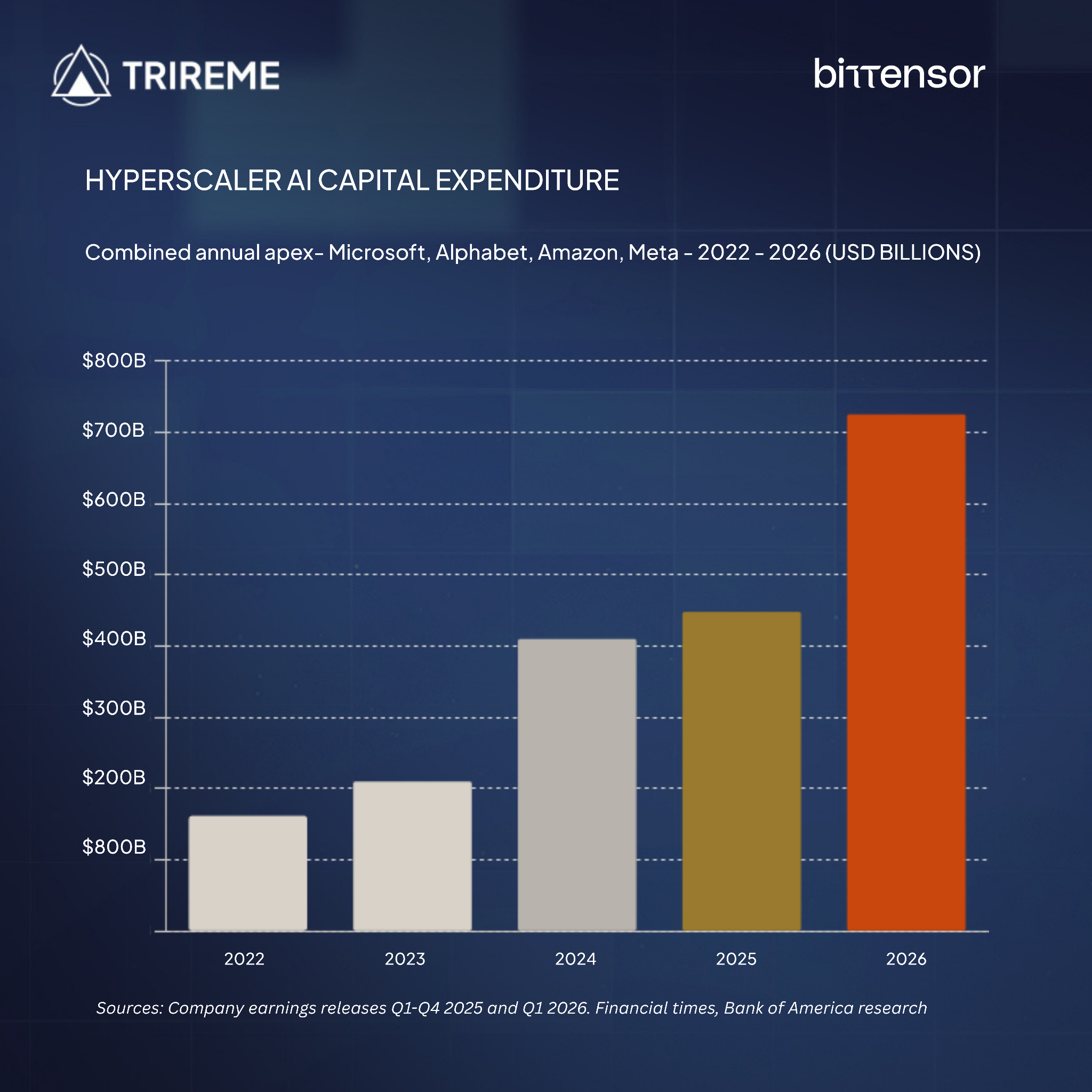
A spending regime has taken hold in technology markets with no historical parallel. The four major hyperscalers: Microsoft, Alphabet, Amazon, and Meta - collectively plan to deploy roughly $725 billion in capital expenditure in 2026, with Amazon alone committing $200 billion, Alphabet guiding to between $175 and $185 billion, Microsoft set at $190 billion, and Meta targeting $115 to $145 billion.
Goldman Sachs projects that hyperscaler capex from 2025 through 2027 will total $1.15 trillion - more than double the $477 billion deployed across the prior three years combined.
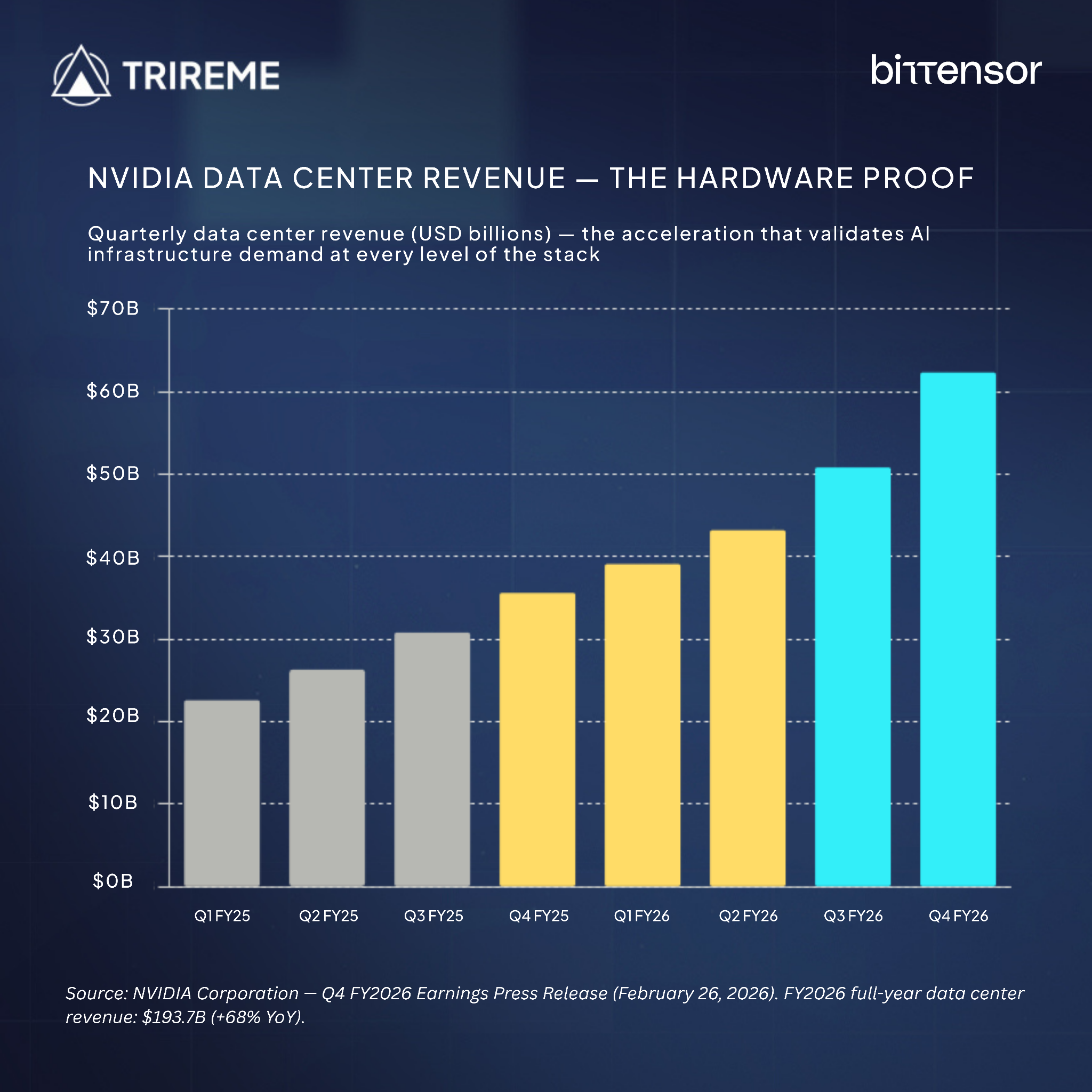
NVIDIA is the clearest real-time proof point that this demand is genuine.
The company posted record fiscal 2026 revenue of $215.9 billion, up 65% year-over-year, with Q4 data center revenue alone reaching $62.3 billion - up 75% from the prior year, representing more than 91% of total quarterly revenue.
Jensen Huang described the moment precisely: the agentic AI inflection point has arrived, and hyperscalers are racing to build the compute factories that will power it. GPU shortages, driven by high-bandwidth memory constraints and advanced packaging bottlenecks at TSMC, have pushed lead times to 36 to 52 weeks and are expected to persist into late 2026.
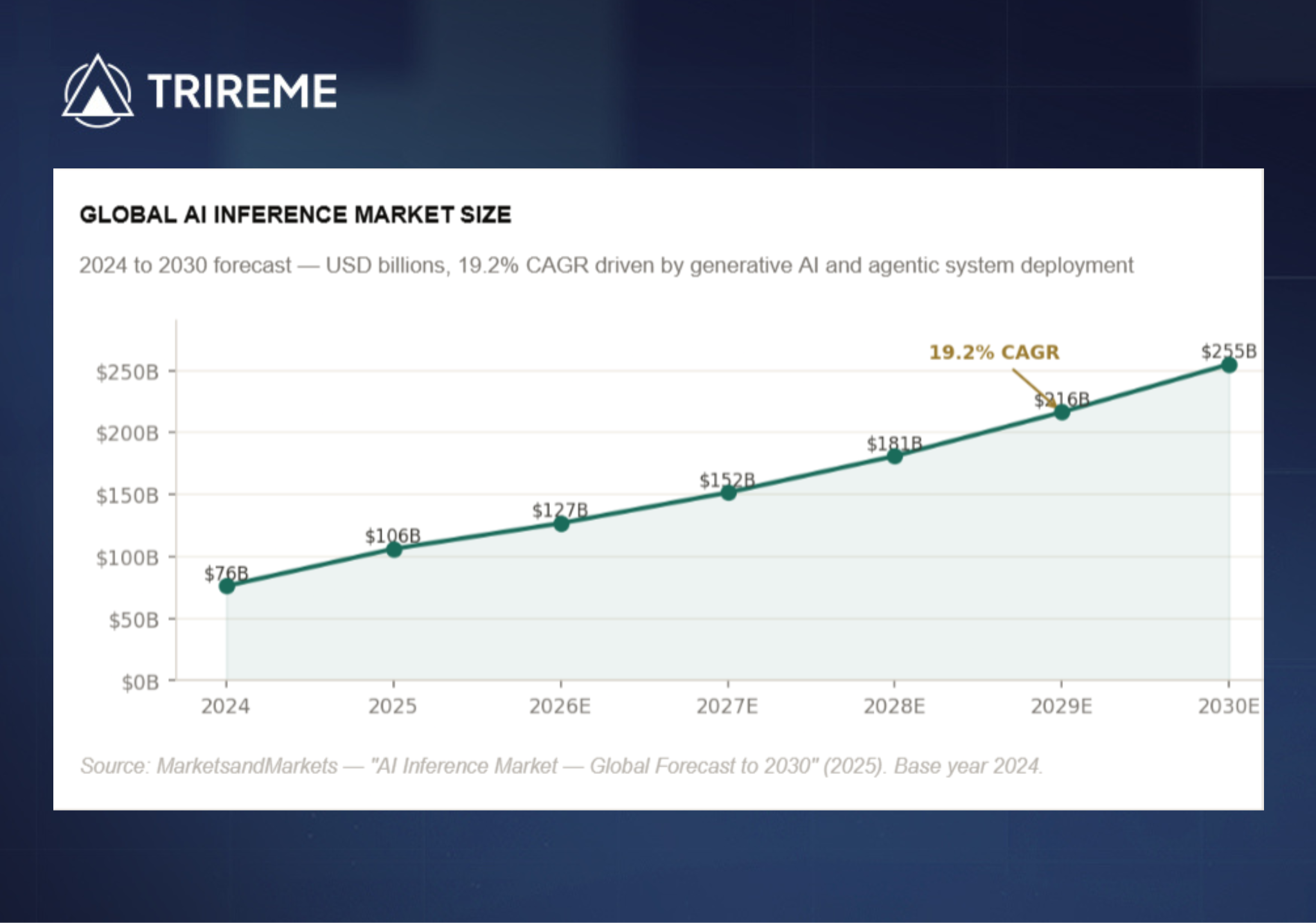
The downstream market validates this at every level. The AI inference market is projected to grow from roughly $106 billion in 2025 to $255 billion by 2030 at a 19.2% CAGR, driven by real-time applications and the proliferation of agentic AI systems requiring continuous, low-latency compute.
McKinsey company estimates that total global AI infrastructure investment will require $6.7 trillion through 2030 to keep pace with compute demand.
According to the Grayscale 2026 Digital Asset Outlook:
AI systems are centralizing around a few dominant firms, creating concerns about trust, bias, and ownership, and crypto offers primitives that directly address these risks.
Decentralized AI development platforms like Bittensor aim to reduce reliance on centralized AI technologies." TAO is named among the most relevant crypto assets for this theme.
The critical institutional insight is that hyperscaler capex and decentralized AI infrastructure are not competing theses - they are complementary.
Centralized spending validates the size of the demand signal.
Decentralized infrastructure addresses the structural risks that concentrated ownership creates: single points of failure, geographic concentration, high marginal costs for marginal users, and access restrictions for participants outside hyperscaler commercial relationships.
The question is not whether AI infrastructure will be built. It will be.
The question is who controls it and whether the architecture that emerges is open or closed.
What Bittensor Is and How Proof-of-Intelligence Works
Bittensor is a decentralized protocol that creates a peer-to-peer marketplace for machine intelligence. It addresses a specific coordination problem: how do you incentivize a globally distributed set of participants to produce, validate, and improve AI outputs without a central orchestrating entity?
The mechanism is called Proof-of-Intelligence.
Miners produce AI outputs - model inferences, data, predictions, or other computational results suited to a specific subnet task. Validators assess the quality of those outputs through consensus-weighted scoring and allocate rewards accordingly.
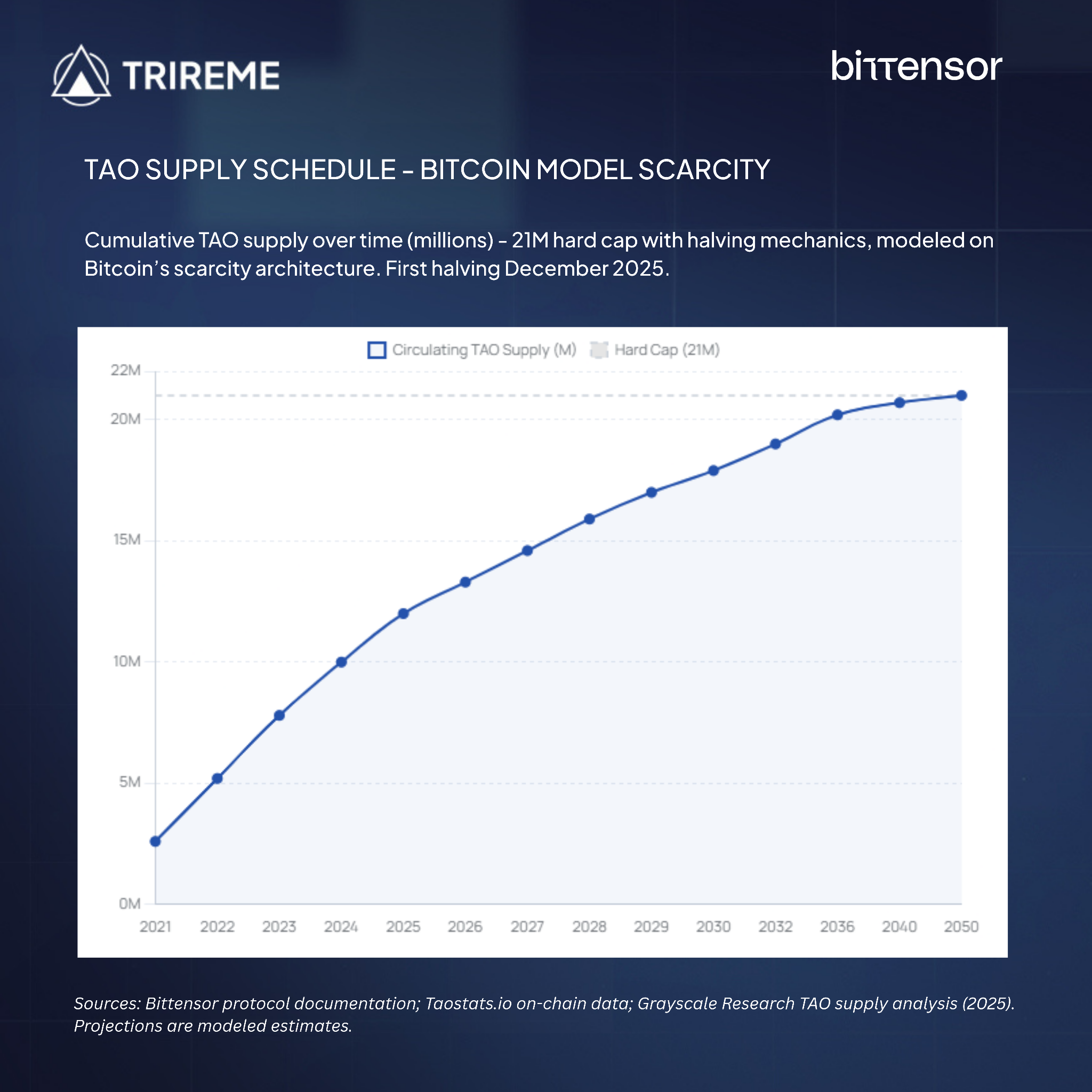
TAO, the native token with a 21 million hard cap, serves as the incentive currency, the settlement asset, and the coordination mechanism for the entire system. High-quality work earns TAO. Low-quality work earns nothing.
Bittensor launched without a premine or initial coin offering, mirroring Bitcoin's fair distribution model.
The network implemented its first halving in December 2025, reducing daily emissions from 7,200 to 3,600 TAO.
This scarcity architecture strengthens as network utility grows: the same fixed issuance schedule must satisfy a larger and more diverse demand base over time.
The Subnet Economy and the dTAO Upgrade: From 32 to 128 Subnets
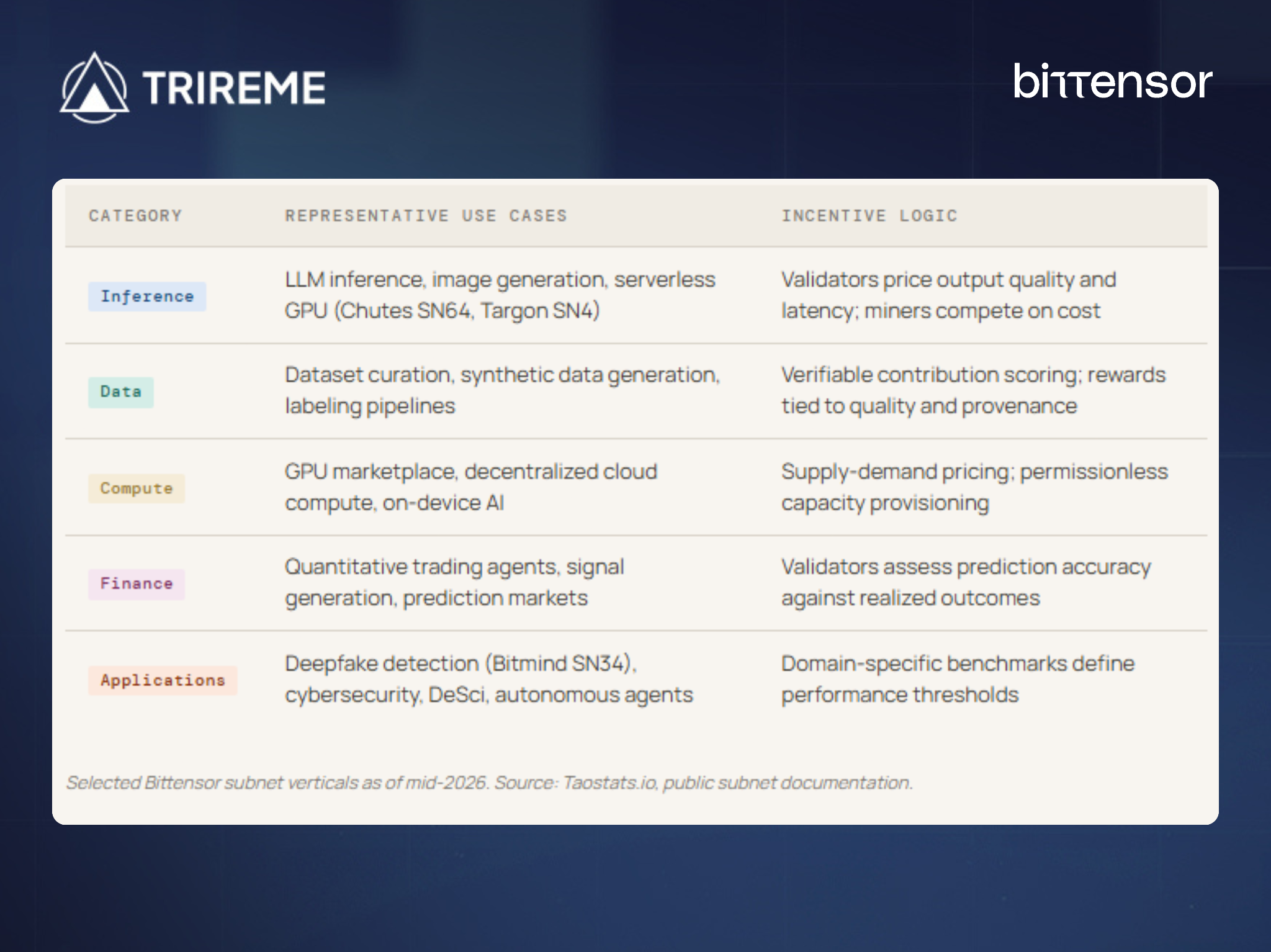
The architecture that transformed Bittensor into a functioning ecosystem is the subnet system. Subnets are independent subnetworks, each focused on a specific AI vertical, with its own miner and validator set, incentive structure, and competitive market dynamics.
Under the dTAO model, TAO emissions are allocated to subnets based on capital injection from market participants.
Market participants directly buy into subnet alpha tokens, and the relative capital flowing into each subnet determines its share of TAO emissions.
This creates a market-driven allocation mechanism where capital flows to subnets that demonstrate real demand and utility.
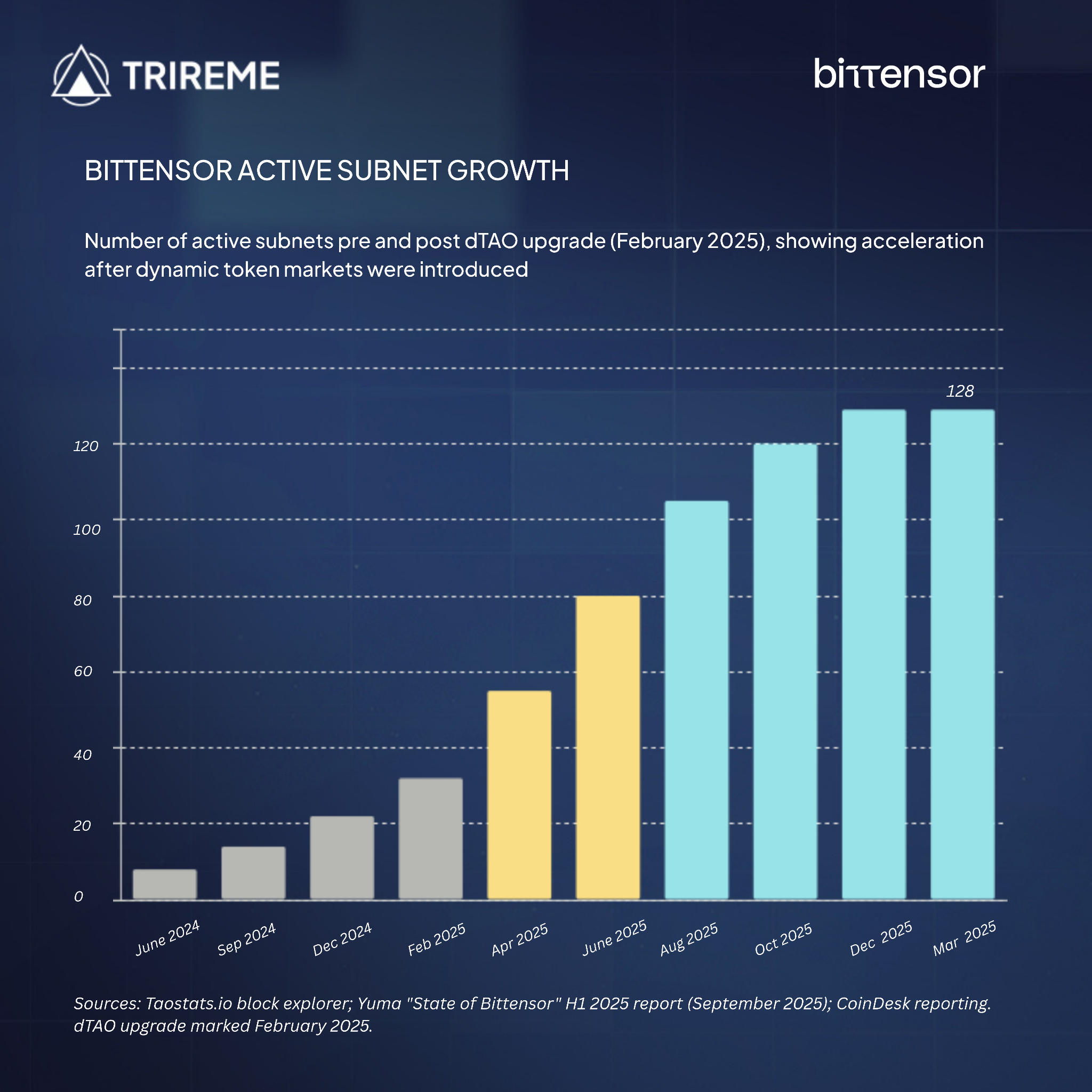
The February 2025 dynamic TAO (dTAO) upgrade was the structural inflection point.
Under dTAO, each subnet received its own automated market maker, enabling direct investment into subnet-specific alpha tokens priced continuously against TAO.
This transformed subnets from internal technical constructs into directly investible markets. Active subnets grew from 32 to 128 between the launch of dTAO and late 2025, with capacity expansion toward 256 subnets planned.
The structural logic mirrors successful modular ecosystems.
Ethereum's application layer grew exponentially once the base layer established credible security and an open developer surface.
App stores created enormous value by letting third-party teams build on stable shared infrastructure without seeking permission.
The subnet architecture applies this dynamic to AI production: Bittensor provides the economic coordination layer; subnets provide the vertical specialization. Each successful subnet deepens the demand for TAO as the reserve coordination asset.
TAO as an Economic Coordination Layer
Understanding TAO requires moving beyond the conventional token analysis framework.
TAO is not primarily a governance token, a utility token for fee payment, or a speculative asset. It is the native settlement currency of a decentralized intelligence market - the asset that denominates production, incentivizes quality, and routes capital to its highest-value use within the subnet economy.
TAO emissions are allocated to subnets via stake-weighted validator consensus.
Subnets attracting more validator stake receive a larger share of emissions, creating a competitive dynamic where demonstrated performance drives capital allocation.
Under dTAO, each subnet's alpha token is priced continuously against TAO - staking TAO into a high-performing subnet validator set is simultaneously a yield-generating activity and a directional position on that subnet's continued performance.
The institutional signal is measurable and growing.
Custody providers including BitGo, Copper, and Crypto.com provide institutional-grade infrastructure for TAO.
Grayscale has launched the Grayscale Bittensor Trust (GTAO on OTCQX) and filed for a spot ETP conversion, with the instrument subsequently listed on the SIX Swiss Exchange — correlating with a 27% price move in early 2026.
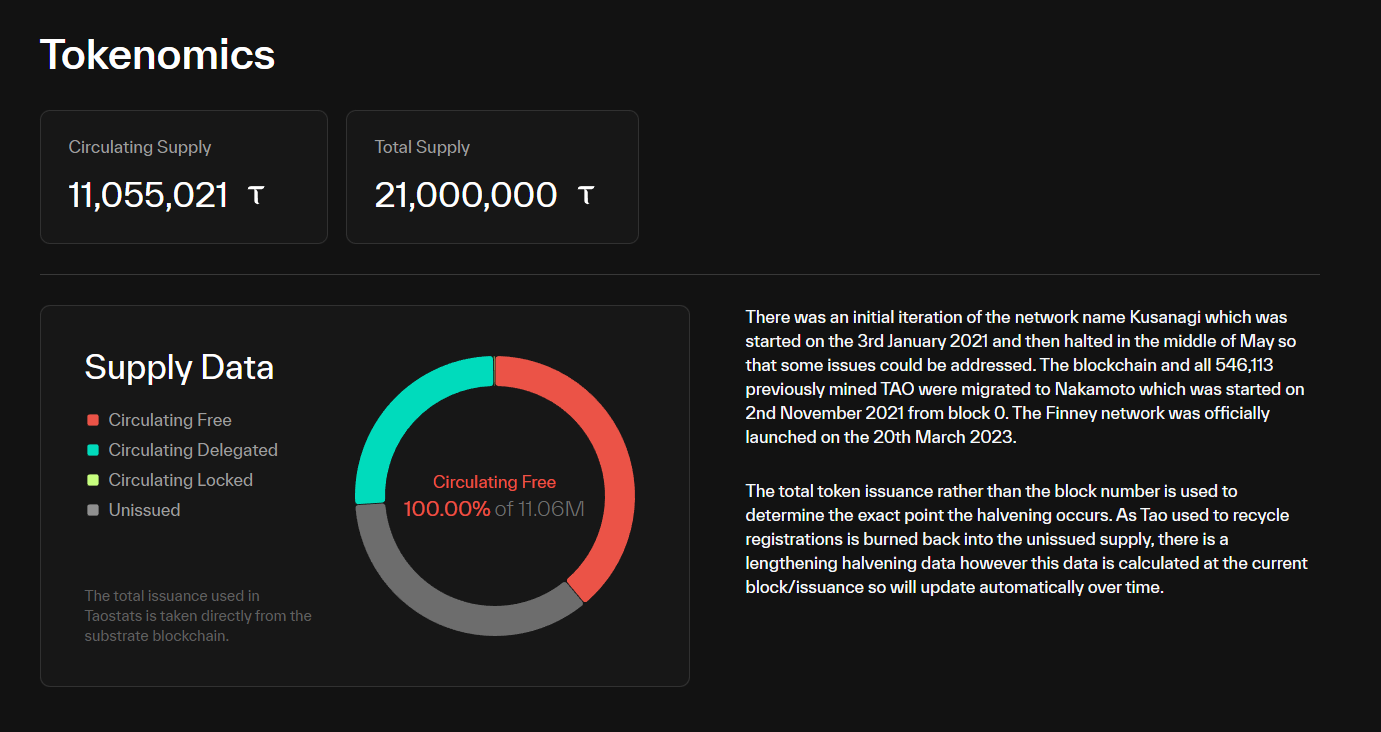
The Bitcoin-model supply curve compounds this dynamic.
With a 21 million hard cap and a halving schedule that progressively constrains new issuance, TAO faces a predictable supply ceiling against an expanding demand base.
The nearest analogy for TAO's structural role is not a speculative token but a reserve settlement asset for a new category of economic activity - the open market for machine intelligence.
The Bittensor Ecosystem
Before diving in, an important distinction: subnets and ecosystem projects are two different things.
Bittensor currently has 128 active subnets — these are the independent AI subnetworks operating natively on the Subtensor chain, each with its own miners, validators, and alpha token market.
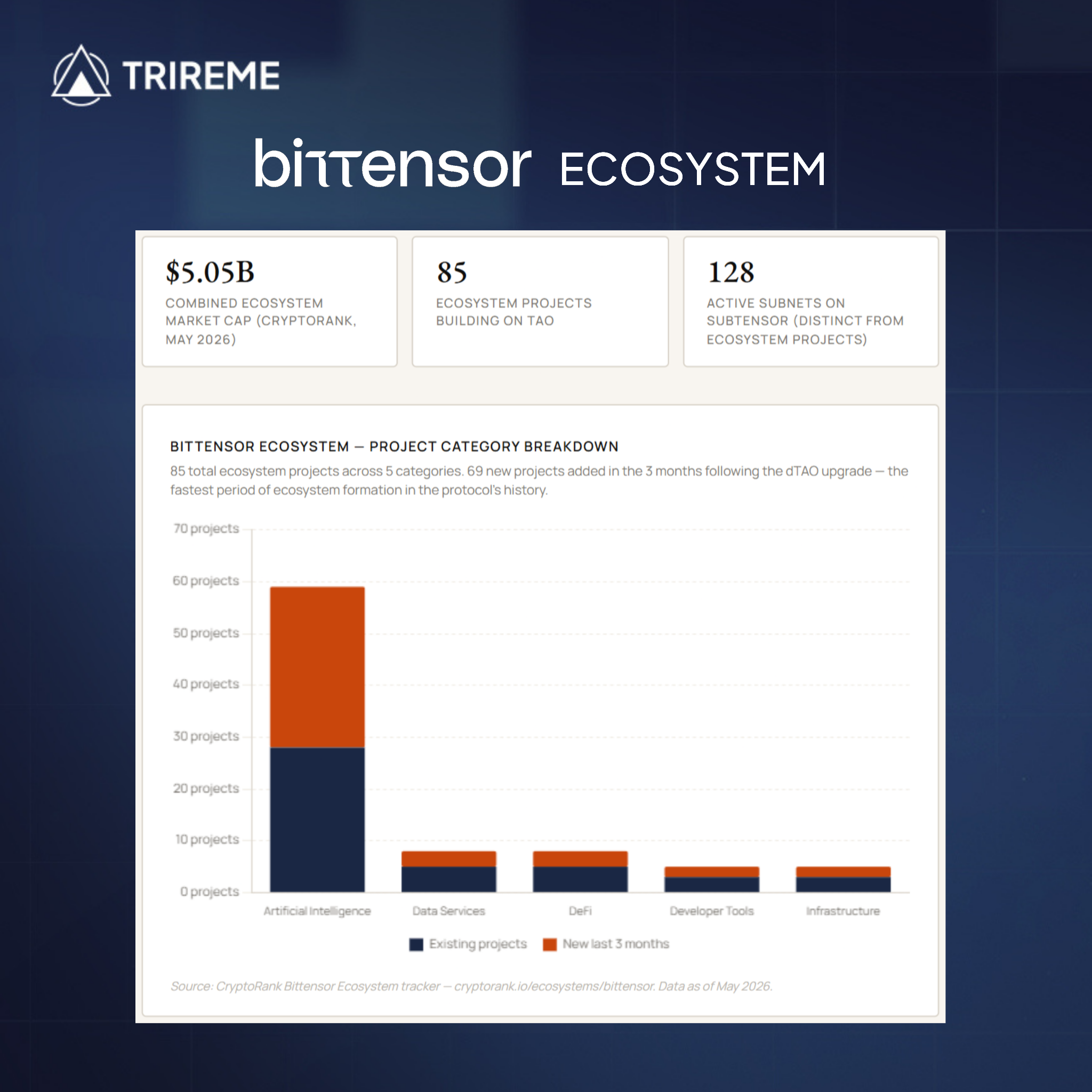
The 85 projects tracked by CryptoRank's Bittensor Ecosystem refer to the broader set of companies, protocols, tools, and infrastructure layers building on top of or alongside the Bittensor network — including wallets, bridges, DeFi protocols, data platforms, and applications. Many ecosystem projects operate across or on top of multiple subnets.
The two numbers are complementary, not interchangeable.
Surrounding Bittensor's core protocol is a growing ecosystem of projects, tools, infrastructure layers, and applications building on top of — or directly within — the network.
According to CryptoRank's Bittensor Ecosystem tracker, 85 projects are currently active within the TAO ecosystem, with 69 new projects added in the last three months alone — a pace of growth that reflects the dTAO upgrade's direct effect on builder and developer activity.
The ecosystem carries a combined market cap of $5.05 billion as of May 2026.
The largest category is Artificial Intelligence (59 projects), spanning inference infrastructure, model training, AI agents, data services, and specialized compute markets.
Supporting that is a growing DeFi layer (8 projects), a Data Services vertical (8 projects), Developer Tools (5 projects), and infrastructure plays that provide the connective tissue between Bittensor's native mechanics and the broader EVM world.
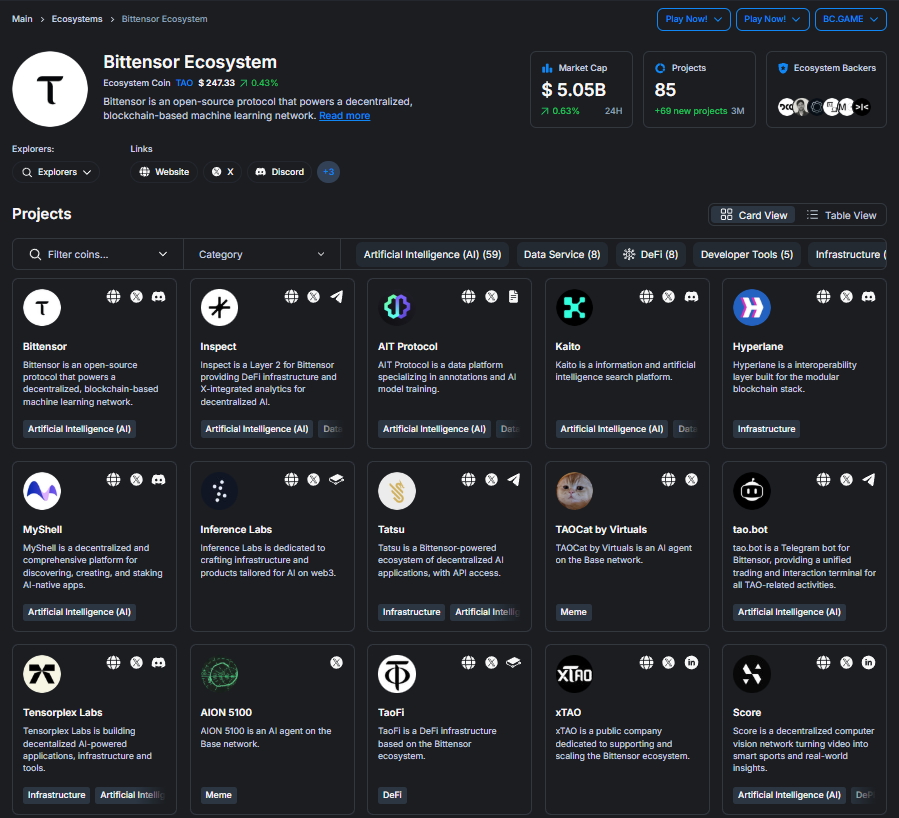
Infrastructure
Hyperlane - Modular interoperability layer for the blockchain stack. Already used by TaoFi to bridge Base users into native Bittensor subnets without new wallet setup.
Talisman Wallet - The leading wallet in Bittensor. Supports TAO staking, subnet charts, cross-chain TAO swaps, subnet signals, on-ramp access, and Ledger support across TAO and all subnets.
Basilica - Agent-native infrastructure layer with GPU compute marketplace - the hardware access layer for subnet development.
AI Applications
Chutes (SN64) - Decentralized serverless AI compute with TEE privacy. One of the top-volume subnets in Project Rubicon's initial Base bridge cohort.
NOVA - AI drug discovery subnet screening billions of compounds for therapeutic potential - real-world scientific output from the open intelligence market.
Gradients - Permissionless fine-tuning of image and text AI models on decentralized Bittensor compute, the model improvement layer of the ecosystem.
DeFi & Liquidity
General Tensor
The permissionless financial layer for Bittensor: Backprop Finance for alpha discovery and trading, Project Rubicon as a liquid-staked-token solution with cross-chain infrastructure, and 0xMarkets for open market infrastructure powered by Bittensor liquidity routing.
Building liquid, tradeable exposure to the companies powering decentralized AI — inference, drug discovery, and model training — through Bittensor assets coming to Base.
Data & Prediction
Numinous - AI-powered prediction market analysis connected to Polymarket and Kalshi, operating as a Bittensor subnet — a live example of AI and finance composability.
ORO (SN15) - Evaluates AI shopping agents on real-world e-commerce tasks - an early example of subnet specialization applied to enterprise consumer use cases.
What the ecosystem composition reveals is that Bittensor is not developing as a single monolithic network but as a platform — in the same architectural sense that Ethereum became one.
The 59 AI projects are not competing versions of the same thing.
They are complementary specializations: some produce intelligence outputs, some verify them, some distribute them, some finance them, and some provide the underlying compute that makes all of it possible.
The 69 new projects added in the last three months suggests that the dTAO upgrade had the same galvanizing effect on builder activity that ERC-20 had on Ethereum's application layer in 2017.
dTAO created investible markets for individual subnet tokens, which gave builders a direct economic incentive to launch verticals, attract market participants, and compete for emissions.
The result is visible in the breadth of what is now being built and the speed at which new entrants are arriving.
Voices from the Ecosystem
As Bittensor's subnet economy matures, the projects building within it offer the clearest signal of where the network is going.
We asked four key ecosystem participants to share their perspective.
Here is what they said.
1. Talisman wallet
Leading wallet infrastructure for the TAO ecosystem
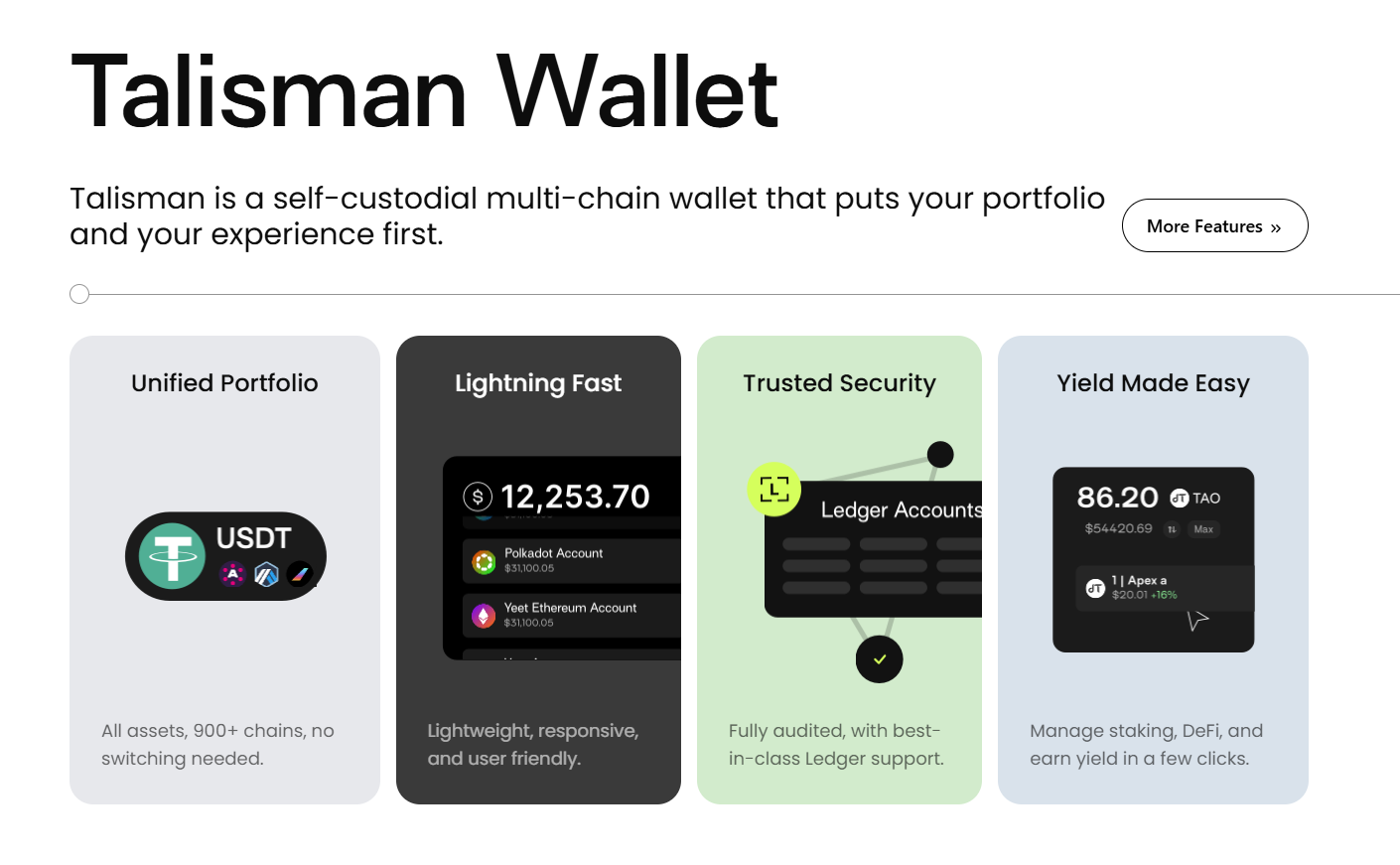
"Bittensor is building the open market for machine intelligence. Talisman is building the wallet layer that makes it accessible. The dTAO upgrade introduced powerful new mechanics for subnet participation, but it also made user experience more important than ever.
As the ecosystem grows, users need a clean interface to stake, swap, track, and understand their positions. That is where Talisman comes in. We are building a complete Bittensor command center that helps users navigate the ecosystem with more clarity and confidence."
— Zerobit, CEO, Talisman
2.TAO.com
Liquid exposure to the decentralized AI economy
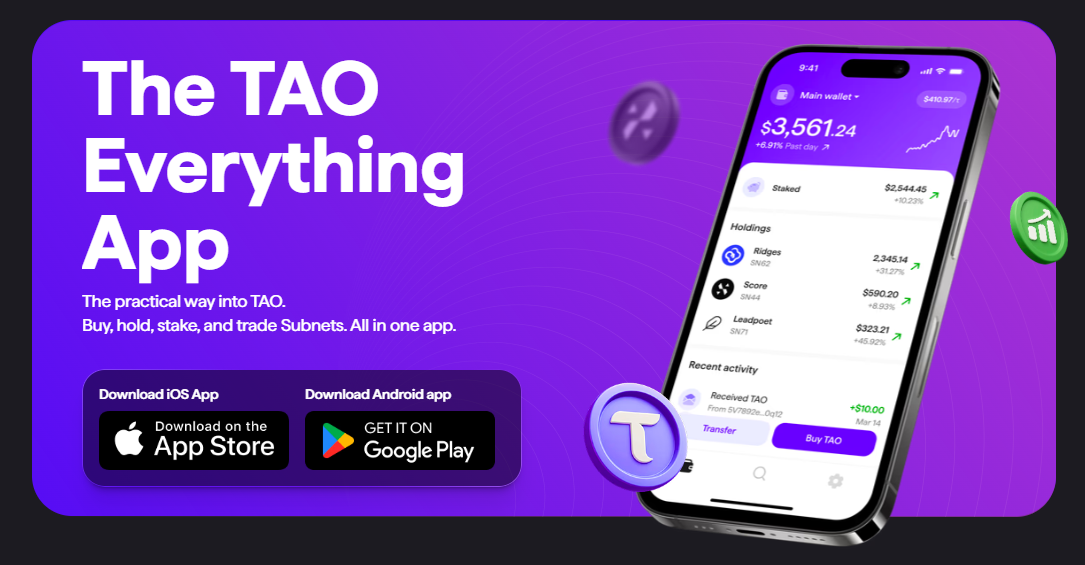
"Base traders will soon be able to gain liquid, tradeable exposure to the companies building decentralized AI across inference, drug discovery, and model training — all through Bittensor assets coming to Base. Intelligence is rapidly becoming a commodity: priced, owned, and exchanged like any other."
— Gyles, Co-Founder, TAO.com
3. Gradients (SN56)
Permissionless post-training for any base model
“Gradients makes post-training work permissionless — with self-serve fine-tuning on your own data, continuous-training contracts that keep enterprise models improving as their data shifts, and full end-to-end post-training for any base model including Bittensor-native pretrained ones.
The incentive layer bubbles up better performance than teams working in silos. This has already been demonstrated: Gradients has outperformed TogetherAI, HuggingFace, and the Gemini Enterprise Agent Platform in head-to-head benchmarks. Nowhere on earth is permissionless contribution to solving model training optimisation possible the way it is in Bittensor.”
— Gradients Team, SN56
4. General Tensor
Building the infrastructure for decentralized AI.
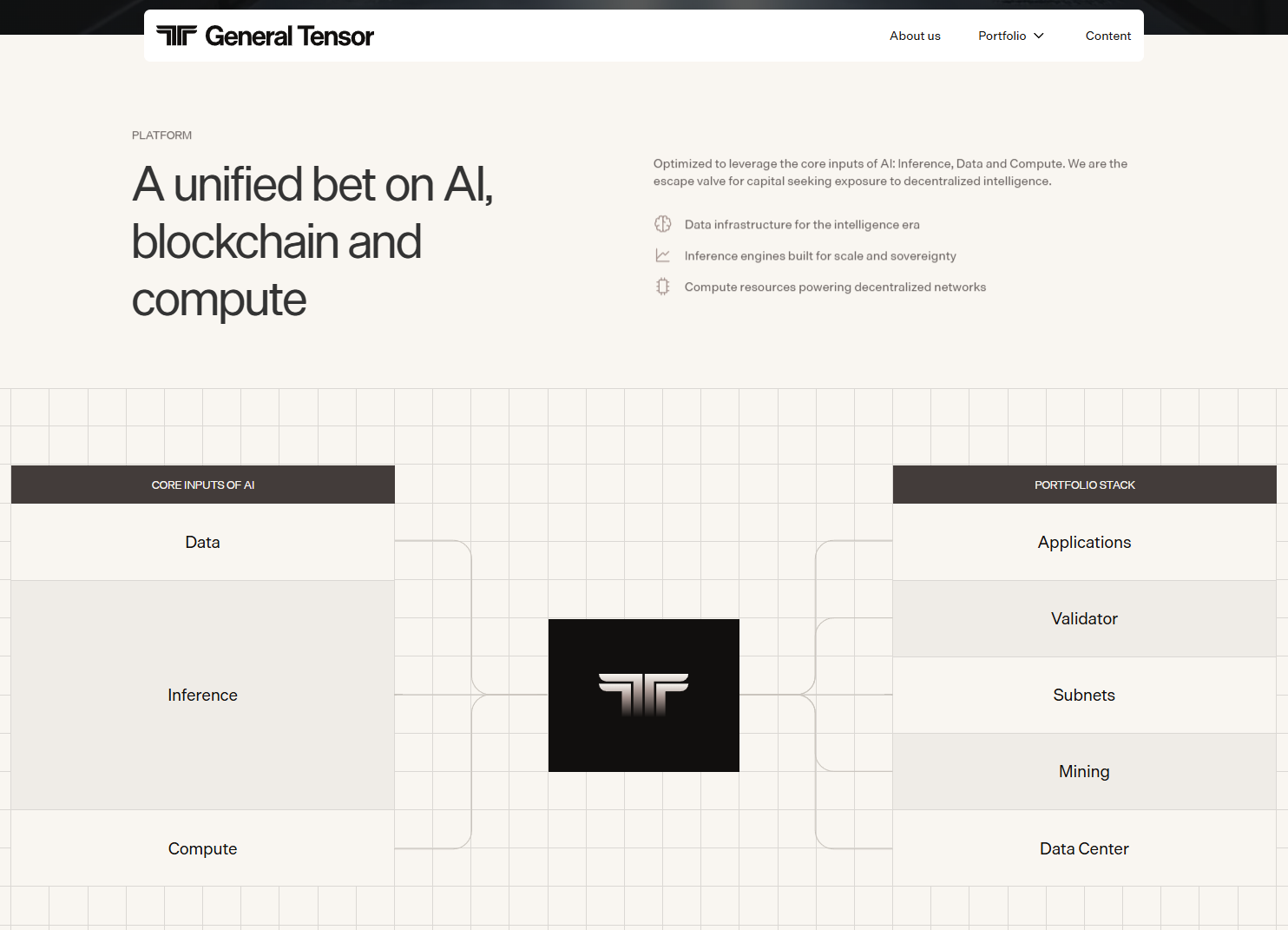
"Decentralized AI matters because closed intelligence can be gated, censored, or switched off. Bittensor gives the world a parallel system where access, incentives, and innovation are governed by open networks, not permissioned gatekeepers."
— Jordan Kotsopoulos, Co-Founder & COO, General Tensor
GENERAL TENSOR PRODUCTS:
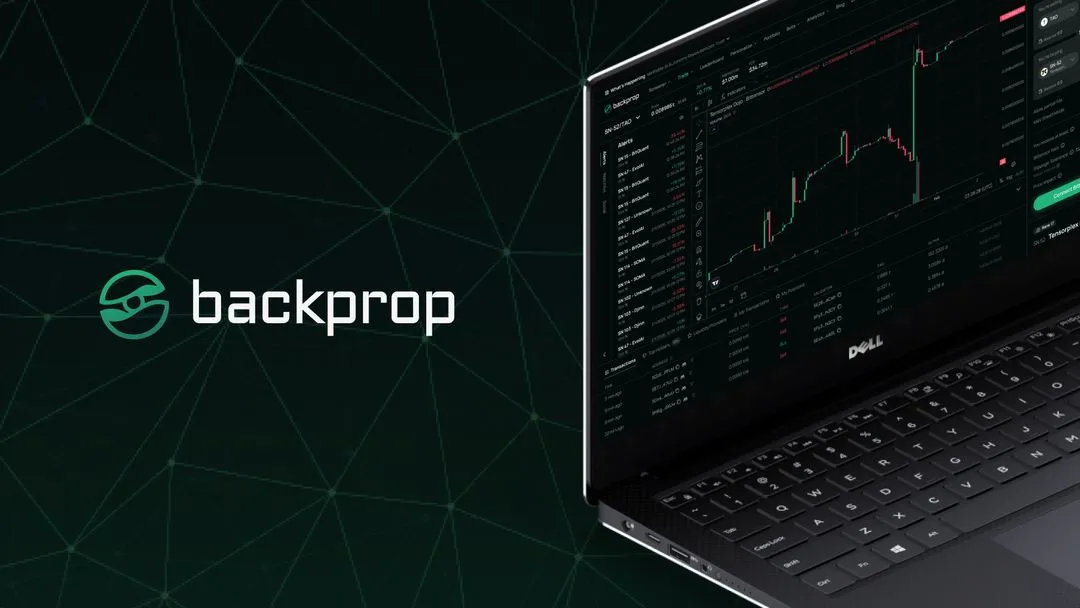
Backprop Finance — alpha discovery and trading on Bittensor
Project Rubicon — liquid-staked-token solution with Chainlink CCIP cross-chain infrastructure

0xMarkets — open market infrastructure powered by Bittensor liquidity routing

Bullish for Bittensor? Why Hyperscaler Capex Validates the Decentralized Case
Hyperscaler capex validates the demand side of the AI infrastructure thesis comprehensively. But it simultaneously creates the structural opportunity that decentralized AI infrastructure is positioned to address.
When compute infrastructure is owned and operated by four or five entities, access to AI capabilities becomes a function of commercial relationships with those entities.
The market for intelligence narrows. Pricing power concentrates. Single points of failure emerge in a layer of the economy that is rapidly becoming as critical as electricity.
Open-source AI has already demonstrated that the hyperscaler moat is not absolute. Meta's LLaMA model family enabled a generation of applications that would not have been viable under purely proprietary licensing. Mistral, Falcon, and a growing cohort of open-weight models have commoditized capabilities previously accessible only through closed API contracts. Yuma's research found that 77% of consumers now say decentralized AI is more beneficial than Big Tech-controlled systems.
Bittensor operates at the infrastructure layer beneath this open-source ecosystem - providing the economic scaffolding for open AI production at scale.
How the Bittensor Ecosystem Can Expand its Network Effects into Base
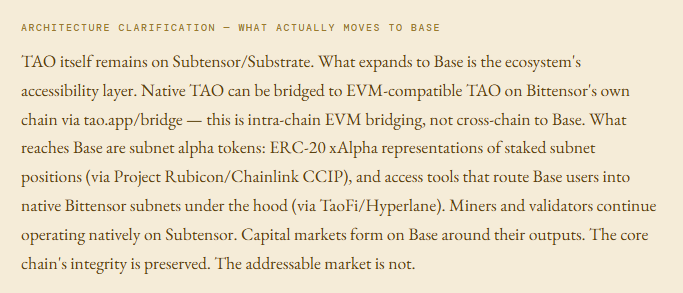
To be precise about what is happening here: TAO has not migrated to Base, and Bittensor has not redeployed its core chain on Coinbase's L2.
TAO remains a native Subtensor/Substrate token.
What has changed is the ecosystem's accessibility. Bittensor's EVM compatibility layer, live since late 2024, enables intra-chain bridging between native TAO (Substrate/SS58) and EVM-compatible TAO on Bittensor's own chain - through official tools like tao.app/bridge.
On top of that foundation, a second layer of bridges and liquidity tools now connects the Bittensor ecosystem to Base, allowing DeFi participants to access subnet alpha tokens and Bittensor exposure without ever leaving their MetaMask wallet or acquiring a native Bittensor account.
The core chain stays where it is. The addressable market expands dramatically.
Base is a deliberate target for this expansion rather than an arbitrary one.
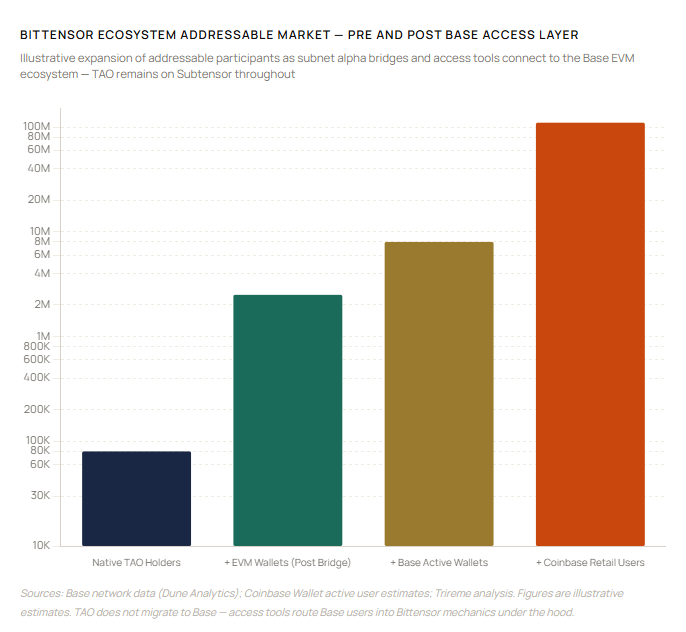
It offers sub-cent transaction fees, Coinbase's distribution infrastructure, millions of active wallets, and a mature DeFi ecosystem with established liquidity venues, lending protocols, and composable financial primitives.
The important distinction is that what bridges to Base is not TAO itself but the subnet alpha tokens - the ERC-20 xAlpha representations of staked subnet positions - and the liquidity access tools that route Base users into the Bittensor ecosystem under the hood.
This architecture preserves the integrity of Bittensor's native mechanics while eliminating the onboarding friction that previously kept EVM-native capital on the sidelines.
How Ecosystem Bridging Creates Compounding Network Effects
The network effects generated by connecting the Bittensor ecosystem to Base operate through four interlocking mechanisms that compound over time rather than adding linearly.
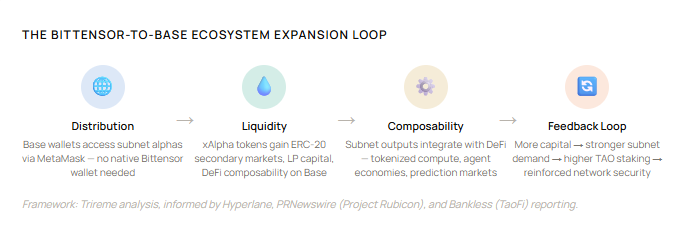
Distribution and Onboarding.
Base's low fees and Coinbase integration allow users to access Bittensor subnet exposure directly via MetaMask using USDC or ETH - without needing native Bittensor wallets, SS58 addresses, or upfront familiarity with Substrate staking mechanics.
Under the hood, tools like TaoFi route assets through Hyperlane to the Bittensor EVM, swap for TAO, and stake into the target subnet - delivering native alpha token exposure to a user who never left their EVM environment.
This expands the addressable market beyond crypto-native TAO holders to the full DeFi user base on Base.
Liquidity and Capital Inflow.
Subnet alpha tokens, represented as ERC-20 xAlpha tokens on Base via Project Rubicon, gain deeper secondary markets, ERC-20 trading pairs, and DeFi composability - including liquidity provision and lending.
This attracts liquidity providers who would not otherwise interact with Bittensor's native chain, intensifies competition among subnets for external capital, and increases aggregate demand for TAO on the Bittensor side for registration, staking, and settlement. More external liquidity means better price discovery for subnet alpha tokens.
Composability and AI-Native Primitives.
Bridged subnet assets enable AI services - inference outputs, agent coordination, data - to integrate with Base DeFi financial infrastructure. Tokenized compute access, prediction markets backed by subnet outputs, and agent economies with on-chain settlement become architecturally possible. This creates hybrid AI-Fi products that strengthen Bittensor's role as a coordination layer for the broader AI economy - not just an internal incentive system visible only to native TAO holders.
Feedback Loops.
Higher external usage drives more subnet revenue and utility, which strengthens alpha token demand on Base, which intensifies emissions competition on Bittensor, which reinforces network security and innovation.
Each new user who accesses the ecosystem through Base without a native Bittensor account still ultimately drives demand for TAO as the coordination and settlement asset at the network's core. The access layer expands. The value accrual layer does not move.
Case Studies: Projects That Have Bridged to Base
The framework above is supported by live deployments.
Two projects: Project Rubicon and TaoFi have already demonstrated the mechanics and early outcomes of connecting the Bittensor ecosystem to Base.
Importantly, neither project moves TAO itself to Base as a native token.
Both work within the correct architecture: TAO stays on Subtensor; what reaches Base are subnet alpha tokens (via xAlpha ERC-20 wrapping in Rubicon's case) and liquidity access tools that route Base users into native Bittensor positions under the hood (in TaoFi's case).
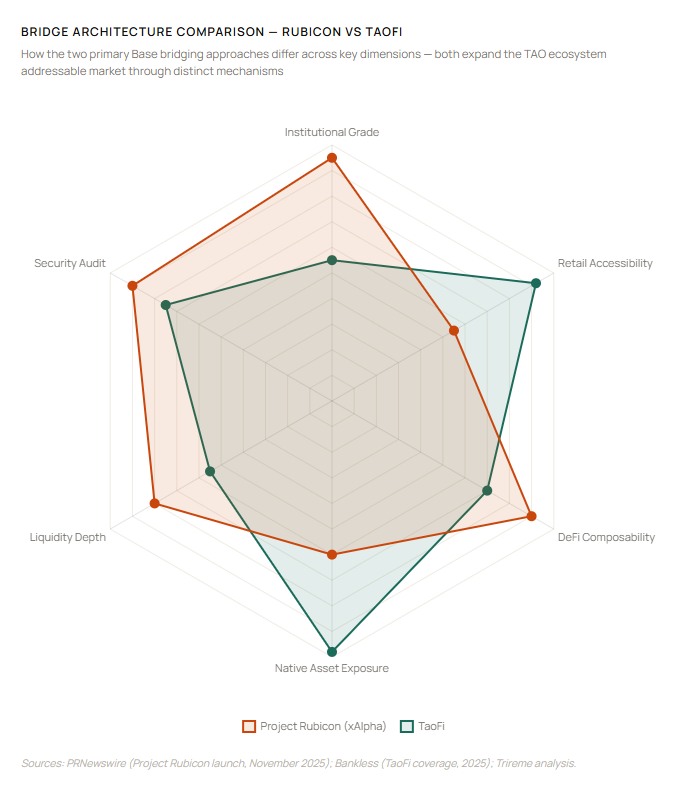
Together they illustrate the two primary architectural approaches: institutional-grade liquid staking with ERC-20 wrapping, and direct one-click swap access for retail and DeFi-native participants.
Case Study 1: Project Rubicon - General TAO Ventures
Launched November 2025 · Institutional-grade subnet alpha bridge
Mechanics.
Project Rubicon is the most prominent institutional-grade bridge focused on Bittensor subnet alpha tokens.
The system operates through non-custodial liquid staking: subnet alpha tokens are staked on the Bittensor EVM, and users receive xAlpha tokens - ERC-20 compatible representations of their staked position.
These xAlpha tokens are then bridgeable via Chainlink CCIP (Cross-Chain Interoperability Protocol, the canonical institutional-grade cross-chain infrastructure) to Base, where they become tradeable, stackable, and composable within Base DeFi.
Partners and Launch.
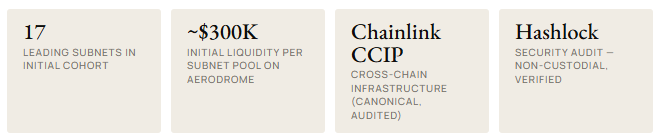
Project Rubicon launched in November 2025 in partnership with Chainlink, Base, powered by Aerodrome - Base's leading decentralized exchange.
The initial cohort covered 17 leading subnets including Targon (SN4), Chutes (SN64), Affine (SN120), Bitmind (SN34), Leadpoet (SN71), and twelve others. Each subnet launched with approximately $300,000 in initial liquidity in Alpha/USDC pools on Aerodrome.
Network Effects Demonstrated.
The xAlpha model solves a structural problem for subnet owners: accessing liquidity without selling core assets. Subnet teams gain DeFi distribution without forcing users into native Bittensor wallets. xAlpha tokens support trading, staking, and LP yield (via Aerodrome fees) while preserving Bittensor-native incentive alignment — miners and validators continue operating on Subtensor, while capital markets form on Base around their outputs. High-performing verticals like inference and agent subnets can now tap global EVM capital without architectural compromise.
Case Study 2: TaoFI - Subnet 10
Active since mid-2025 · One-click swap access to native subnet alphas

Mechanics.
TaoFi takes a different architectural approach from Project Rubicon, prioritizing user experience and direct asset access. Rather than creating ERC-20 representative tokens, TaoFi enables one-click swaps from Base (USDC, ETH, Tether) into native Bittensor subnet alpha tokens.
The routing happens entirely under the hood: Base assets are bridged via Hyperlane to the Bittensor EVM - Bittensor's own EVM compatibility layer, not Base itself - swapped for TAO in Uniswap v3 pools on that chain, and then staked into the target subnet.
Users receive native alphas held in Hyperlane-powered interchain accounts, controlled via their MetaMask wallet.
TAO does not move to Base.
What moves is the user's intent and capital, which TaoFi routes through Bittensor's EVM layer to produce native subnet exposure.
Differentiating Features.
The no-wrapped-token design is significant. Users receive actual exposure to subnet emissions and yield rather than a derivative position.
This preserves the economic integrity of the Bittensor incentive system while dramatically lowering onboarding friction.
TaoFi additionally supports stablecoin bridging through taoUSD, liquidity provision with SN10 subnet rewards for LPs, and expansions to Ethereum mainnet - broadening the onramp beyond Base to the full EVM ecosystem.
Network Effects Demonstrated.
TaoFi addresses a different market segment than Project Rubicon.
Where Rubicon targets institutions and liquidity providers seeking ERC-20 composability, TaoFi targets DeFi-native users and retail participants seeking direct subnet exposure without infrastructure complexity.
Together the two models cover both the institutional and retail sides of the distribution opportunity - institutional capital formation through xAlpha on Aerodrome, and direct retail access through one-click swaps with native asset delivery.
What the Case Studies Tell Us About TAO Network Effects
Taken together, Project Rubicon and TaoFi demonstrate something important about how decentralized AI infrastructure scales.
The Bittensor network does not require a single canonical bridge or a single liquidity architecture. It benefits from multiple complementary approaches targeting different market segments simultaneously - institutional liquid staking with ERC-20 composability on one side, frictionless retail access with native asset delivery on the other.
This mirrors the pattern seen in successful cross-chain ecosystems.
Ethereum's expansion into Layer 2s did not happen through a single bridge but through multiple concurrent bridging protocols each serving different user profiles and risk tolerances.
The result was not fragmentation - it was exponential growth in the addressable market for Ethereum-native assets. Bittensor's bridging to Base follows the same trajectory, with TAO occupying the same structural role that ETH occupies in the Ethereum ecosystem: the coordination and settlement asset that every bridge, every subnet, and every xAlpha token ultimately derives its value from.
The Broader Ecosystem Signal
Project Rubicon and TaoFi are the first movers in a category that is still forming.
The 17-subnet Rubicon initial cohort represents roughly 13% of the current 129 active subnets.
As the dTAO subnet economy matures and more verticals demonstrate sustained trading volume and community demand, the pipeline of subnets with the market cap and activation to justify an xAlpha bridge to Base will grow substantially.
Each new bridge reinforces TAO's role as the coordination and settlement layer on Subtensor - not by moving TAO, but by increasing the number of participants whose capital flows ultimately demand TAO to function.
The Institutional Perspective: Early Infrastructure Positioning
The institutional investment thesis for Bittensor is not primarily a token price thesis.
It is an infrastructure positioning thesis.
The most useful historical frame is early institutional positioning in cloud computing between 2008 and 2012, or in internet infrastructure between 1996 and 2000.
In both historical cases, the critical distinction between well-positioned and poorly-positioned capital was between betting on application outcomes and betting on infrastructure necessity.
Application outcomes are difficult to predict. Infrastructure necessity, once the demand signal is clear, is considerably easier to assess.
Compute was going to be consumed. Bandwidth was going to be consumed.
The question was which entities would sit at the coordination layer - and what asset would denominate that coordination.
Grayscale's 2026 Digital Asset Outlook frames this year as the dawn of the institutional era for digital assets.
The firm estimates that less than 0.5% of U.S. advised wealth is currently allocated to digital assets - and expects this to grow materially as platforms complete due diligence and incorporate crypto into model portfolios.
Harvard Management Company and Mubadala - Abu Dhabi's sovereign wealth fund - are among the early institutional movers in crypto ETP allocations.
The regulatory environment shifted substantially in 2025: the GENIUS Act, SEC clarity on staking, Generic Listing Standards for crypto ETPs, and the rescission of SAB 121 collectively lowered the barriers for regulated capital to participate in digital asset markets.
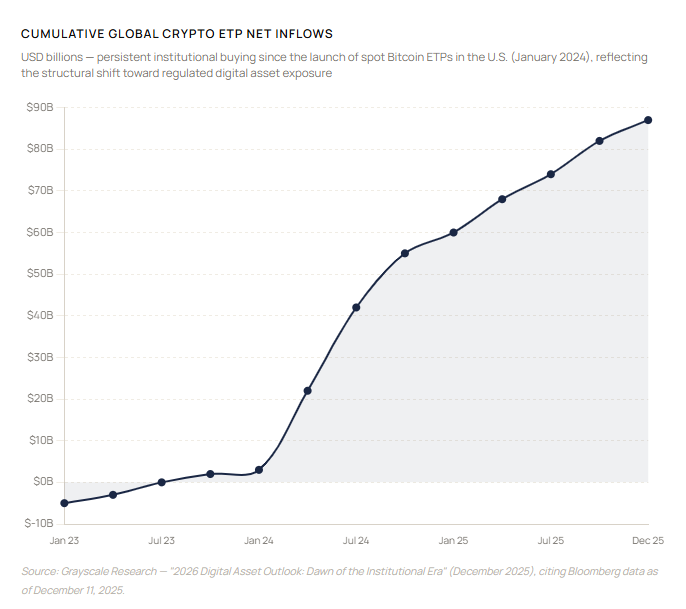
TAO's positioning within this institutional context is measurable.
The Grayscale Bittensor Trust (GTAO) trades on OTCQX with an ETP conversion filing underway.
Yuma's $691 million validator stake, BitGo and Copper custody integration, the SIX Swiss Exchange listing, and Grayscale's identification of TAO among its top 2026 AI theme assets - alongside the Base bridging developments that expand TAO's liquidity and distribution - represent the converging conditions that mark the transition from a speculative asset to an investible infrastructure category.
Risks and Challenges: A Balanced Assessment
Institutional credibility requires honest engagement with the risks in this thesis. There are several material challenges that warrant careful analysis.
Valuation Risk
TAO experienced a nearly 50% drawdown through parts of 2025, including a "sell the news" decline following the December halving. Current valuations embed growth expectations in subnet utility and institutional adoption that may not materialize on the anticipated timeline.
Bridge and Smart Contract Risk
Both Project Rubicon and TaoFi introduce smart contract and bridge risk layers on top of native Bittensor mechanics. Chainlink CCIP and Hyperlane have strong track records, but cross-chain bridges remain among the highest-risk infrastructure components in the crypto ecosystem. Hashlock auditing reduces but does not eliminate this risk.
Centralization Drift
Yuma's 19% stake concentration raises governance questions.
The protocol's decentralization thesis requires that no single participant can unilaterally direct emissions or network parameters. The institutional staking dynamic that provides security also creates stakeholder concentration requiring ongoing monitoring.
Liquidity Fragmentation
Multiple bridging approaches and pool structures - xAlpha/USDC, native alphas via TaoFi, TAO/ETH on mainnet - could fragment liquidity across venues rather than concentrating it. Fragmented liquidity reduces price discovery efficiency and increases slippage for larger participants.
Regulatory Environment
While the U.S. regulatory environment improved substantially in 2025, token classification and AI-specific regulatory frameworks remain unsettled across key markets. Cross-chain bridging of AI-native tokens introduces additional complexity around how regulators classify xAlpha instruments in different jurisdictions.
-------------------
These risks are real and should be weighted carefully in any allocation analysis.
Disciplined position sizing, time horizon calibration consistent with an infrastructure thesis, and ongoing monitoring of development milestones - subnet count and quality, bridge TVL growth, validator decentralization, ETP approval status - are the appropriate responses.
The risks define the conditions under which the thesis plays out; they do not invalidate the thesis.
Conclusion: The Open Intelligence Economy Has a Capital Problem. We Are Solving It.
NVIDIA printed $215.9 billion in revenue.
Hyperscalers are deploying $725 billion in a single year.
Grayscale named TAO in its top institutional themes for 2026.
The Opentensor Foundation built a subnet economy that grew from 32 to 128 active markets in under twelve months.
The demand signal is real. The infrastructure is live.
The ecosystem - 85 projects, $5.05 billion in combined market cap, 69 new entrants in three months - is building in public, at a pace that has no precedent in the history of decentralized networks.
What comes next is a capital markets problem, not a technology problem.
Bittensor's subnet economy produces intelligence. It has never had a liquidity layer worthy of what it produces.
The subnet alpha tokens that represent some of the most compelling AI infrastructure verticals in crypto - inference, drug discovery, prediction markets, autonomous agents - have been largely inaccessible to the DeFi capital base that would price them correctly, trade them efficiently, and distribute them globally.
That gap is not a permanent feature of the ecosystem.
It is an infrastructure problem with a known solution.
We at Trireme are here to complete that work at scale.
We are not observers of the Bittensor ecosystem.
We are participants, market makers, and infrastructure builders with a track record and a pipeline.
The Bittensor ecosystem built the most credible open intelligence market in the world.
It deserves a capital markets layer that matches its ambition.
If you are a subnet team, a validator, or a builder inside the Bittensor ecosystem reading this, we want to work with you.
The open intelligence economy is not a thesis anymore. It is a construction project.
And the liquidity layer is the piece that makes everything else visible to the world.