Token Launch Strategy: Building What Works in Any Market Condition
Introduction
Unlike traditional markets, crypto markets never close.
Tokens trade 24/7, across all time zones, across all sentiment regimes. The moment a token goes live, it is immediately exposed to global liquidity, speculation, and sell pressure.
This makes Token Generation Events (TGEs) uniquely high-stakes.
In traditional finance, companies can manage narratives across quarters.
In crypto, a token is judged within minutes.
You only get one first impression with the market.
And in uncertain conditions, where liquidity is selective and sentiment shifts quickly, that first impression often determines whether a token stabilizes or collapses.
A well-executed TGE is not just a launch.
It is a critical lifecycle event that can extend runway, build treasury strength, and establish long-term credibility.
What a Sound Token Launch Strategy Brings Together
A successful token launch is not driven by a single variable.
It is the result of multiple systems working in alignment:
- Product-market fit
- Tokenomics design
- Deep understanding of market participants
- Go-to-market strategy
- Branding and narrative
- Community strength
- Credible partnerships and catalysts
Check out this article for more info: Tokenomics vs Marketing
Most projects approach these in isolation.
The market evaluates them as a system.
When these components are aligned and executed properly, the results are visible immediately:
- Demand at TGE increases.
- Volume becomes sustainable.
- Launch multiples improve.
- Post-launch price action stabilizes.
Projects that aligned early access programs, staking incentives, and narrative positioning saw significantly more stable post-TGE behavior compared to those relying purely on exchange hype.
Tokenomics Principles & Inflation Models I
A token is not just a financial instrument.
It is an incentive engine.
If that engine is misaligned, everything downstream breaks.
The primary purpose of tokenomics is to shape behavior. Fundraising is only a byproduct.
Most token failures can be traced back to a few recurring issues:
• Liquidity and treasury mismanagement • Incentive misalignment between users, investors, and teams • Supply and demand imbalance at launch • Tokenomics designed without considering real market conditions
For example, multiple 2021–2022 era projects launched with aggressive emissions schedules designed to “bootstrap growth.”
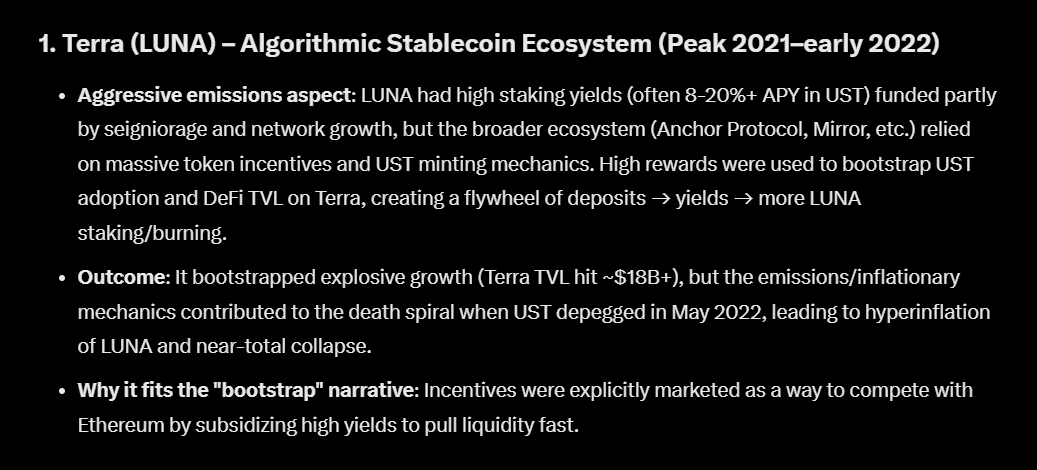
While they initially attracted liquidity, they created constant sell pressure that the market could not absorb.
The result was a slow but inevitable price decay.
Strong tokenomics follows a structured process:
Objective → Stakeholders → Mechanisms → Simulation
Before emissions and unlocks are finalized, they must be modeled under different growth and price scenarios.
Without this, even well-funded projects can enter hyperinflation dynamics early in their lifecycle.
Tokenomics Principles & Inflation Models II
Price is always a function of supply and demand.
Tokenomics is the system that controls both.
Demand is driven by three groups:
- Users generate demand through utility
- Investors create demand through conviction and long-term positioning.
- Traders provide demand through liquidity and speculation.
Supply, on the other hand, comes from:
- Pre-sale allocations
- Team and treasury holdings
- Incentive programs and emissions
- Market maker positioning
One of the most overlooked variables is velocity.
High-velocity systems, such as tokens heavily used for payments or trading, can generate strong volume but also rapid sell pressure.
Low-velocity systems, such as staking-based ecosystems, can stabilize supply but risk creating long-term inflation if rewards are not balanced.
Bitcoin offers a simple but powerful example.
Its halving mechanism is not just monetary policy.
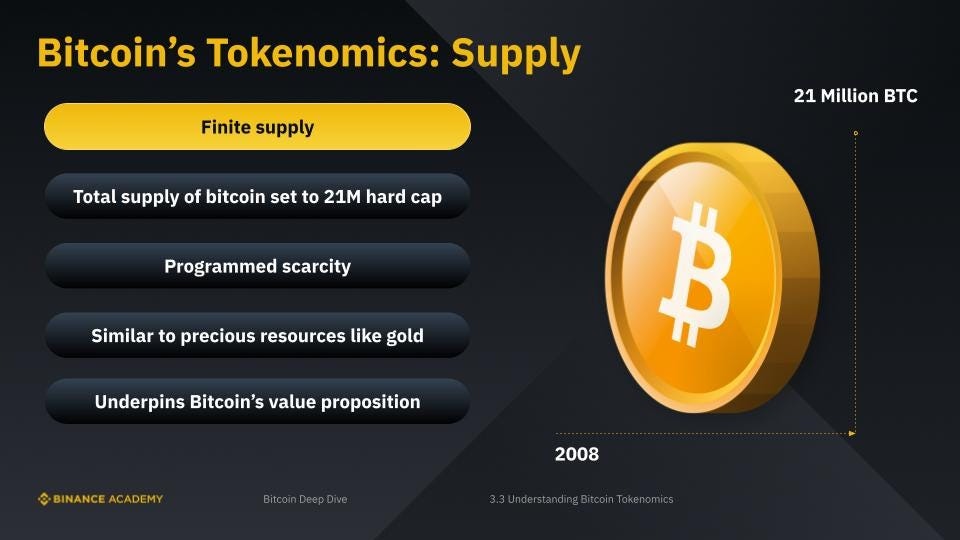
It is a behavioral incentive model that controls supply issuance over time, aligning miner incentives with long-term scarcity.
Every tokenomics decision should ultimately answer one question:
How does this affect supply and demand at a specific moment in time?
Understanding User & Market Participants
Price does not emerge from intention.
It emerges from interaction.
Founders are not launching a token into a vacuum. They are introducing supply into a live system with different participant behaviors.
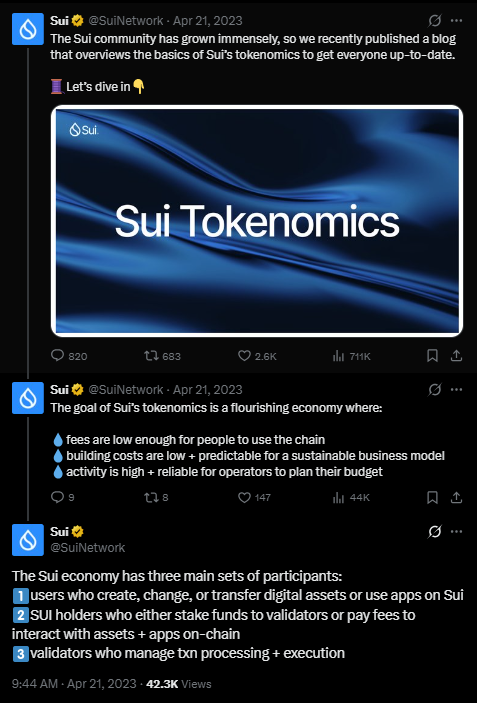
There are three primary groups:
- Users care about utility. They form the baseline demand that gives the token fundamental value.
- Investors care about risk-adjusted returns. They analyze token structure, market opportunity, and execution capability.
- Traders care about liquidity and volatility. They provide efficiency but can amplify both upside and downside.
One common mistake is treating all participants as a single audience.
For example, messaging designed to attract long-term investors often fails to resonate with traders, and vice versa. Similarly, incentive structures designed for traders may not create retention among users.
Strong launches segment their strategy.
They align communication, incentives, and expectations for each group independently.
Go-To-Market Strategy
A token launch is not a marketing campaign.
It is a credibility event.
In uncertain markets, credibility becomes the primary filter for capital.
Strong GTM strategies focus on:
- Clear positioning
- Product readiness
- Sustainable token design
- Institutional-level preparation
In recent market conditions, we have seen a shift toward Web2-like expectations.
Projects are increasingly evaluated based on traction, usage, and revenue, not just narrative strength.
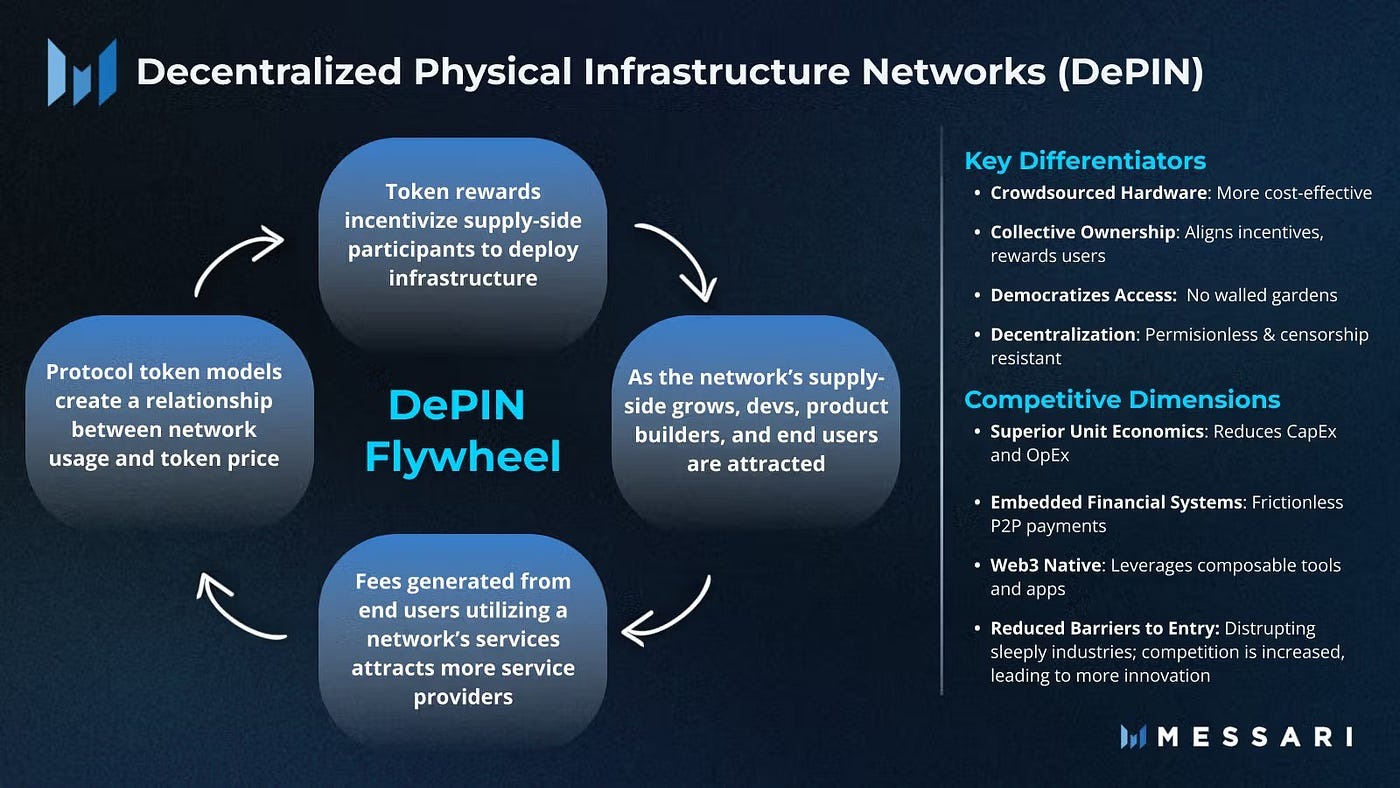
This is evident in how newer infrastructure and DePIN projects approach launches.
Many prioritize demonstrating real usage before token issuance, reducing reliance on speculative demand.
Execution discipline is critical.
The most successful projects define clear 30, 60, and 90-day deliverables post-TGE. This creates continuity between launch and long-term growth.
Branding & Narrative Strategy
In a saturated market, clarity is a competitive advantage.
A strong narrative answers:
- Why does this project matter?
- Who is it for?
- What makes it different?
- How will it execute?
Weak narratives lead to low-quality demand.
This often results in “tourist capital” — participants who enter for short-term speculation and exit quickly.
Projects that maintain consistent positioning across channels tend to attract higher-quality participants.
Over time, this translates into stronger holder bases and more stable price behavior.
Community Building & Engagement
Community is often misunderstood as audience size.
In reality, it is about participation quality and retention.
Strong communities are built through:
- Early high-touch engagement
- Clear and repeatable messaging
- Emotional alignment with the project vision
A common pattern among successful launches is the presence of “super users” or highly engaged early participants.
Ambassadors often become the most effective early distribution layer, sustaining momentum beyond the initial launch window.
They bridge the gap between narrative and participation, turning attention into long-term engagement.
Building Catalysts
Momentum is not self-sustaining.
It must be engineered.
Catalysts are not random announcements. They are structured events that reduce uncertainty and drive engagement.
Examples of effective catalysts include:
- Product launches tied to usage growth
- Exchange listings aligned with liquidity readiness
- Partnerships that introduce real demand
- Ecosystem expansions that increase utility
A good example is how some ecosystems sequence major announcements around liquidity events.
Instead of releasing updates randomly, they align them with periods where the market can absorb and react to new information.
The key is planning.
Catalysts should be mapped across time and aligned with market structure.
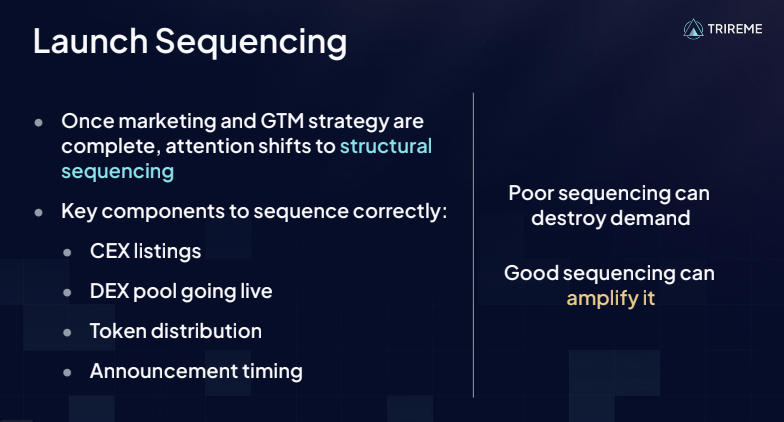
Launch Sequencing
Once GTM and narrative are established, attention shifts to execution.
Launch sequencing determines how demand interacts with supply.
Key elements include:
- CEX listings
- DEX pools
- Token distribution
- Announcement timing
Poor sequencing can fragment demand and create unnecessary volatility.
Strong sequencing concentrates liquidity and amplifies momentum.
CEX Listings
Centralized exchanges play a critical role at launch.
They provide:
- Immediate distribution
- Access to large user bases
- Built-in liquidity
High-quality exchanges also enforce performance standards.
They evaluate metrics such as volume, retention, and market behavior.
This is why securing at least one credible CEX at TGE is often considered a baseline requirement.
DEX Listings
Decentralized exchanges have evolved significantly.
This year, the cumulative DEX volume just crossed $12.5T for the first time ever.
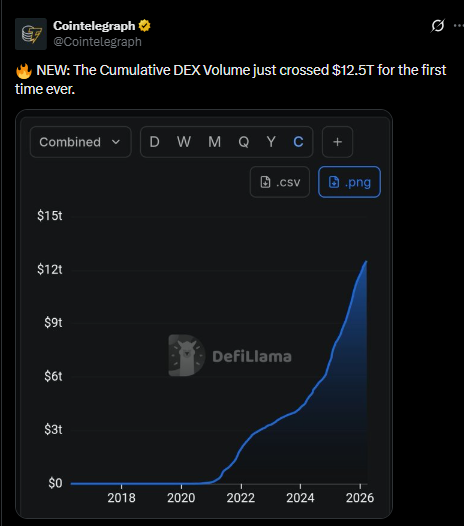
In many cases, DEX volumes now rival or exceed centralized platforms.
However, DEXs require careful liquidity design.
Without sufficient depth, pools become highly volatile and susceptible to manipulation.
Best practices include:
- Launching at least one DEX pool
- Ensuring adequate liquidity per side
- Aligning incentives with early participants
Token Distribution
Token distribution is one of the most critical and underestimated factors.
Most tokens are distributed at or shortly after TGE.
The key assumption should always be:
All distributed tokens will be sold.
This mindset forces teams to design for real market behavior, not ideal scenarios.
Timing, methodology, and unlock structure must be carefully coordinated.
Recap: Unlock Structures
Unlock mechanisms define how sell pressure enters the market.
Block unlocks create predictable but high-impact events.
Linear unlocks introduce continuous pressure.
KPI-based unlocks align distribution with performance but add complexity.
There is no perfect model.
But poorly timed unlocks can overwhelm demand and destabilize price.
Announcement Timing
Timing is not communication.
It is strategy.
Well-timed announcements can:
- Maintain speculation
- Support demand
- Extend momentum
Poor timing can:
- Waste catalysts
- Accelerate drawdowns
Announcements should be aligned with liquidity conditions and post-launch behavior.
Bringing It All Together
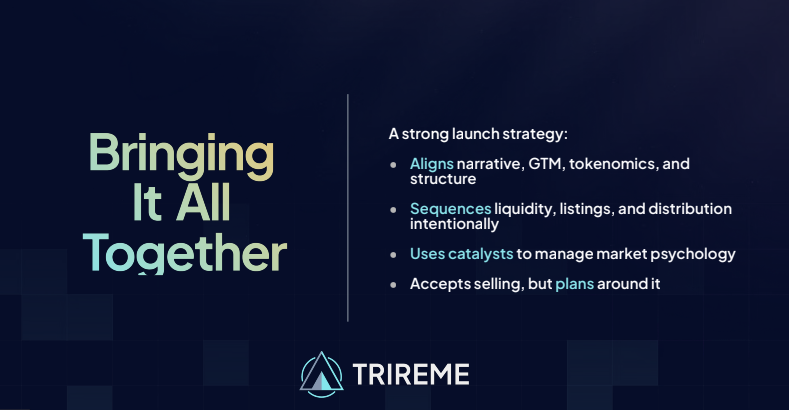
A strong token launch strategy aligns:
- Tokenomics
- GTM
- Narrative
- Liquidity
- Catalysts
It sequences:
- Listings
- Distribution
- Announcements
It acknowledges a key reality:
Selling is inevitable.
The role of strategy is to ensure the market can absorb it.
CEX First, DEX Second
A structured approach often begins with a CEX listing.
This concentrates demand and allows for more controlled price discovery.
DEX liquidity is then introduced shortly after.
This enables arbitrage, reinforces liquidity, and extends trading activity.
Token Distribution (Execution Layer)
Execution is as important as design.
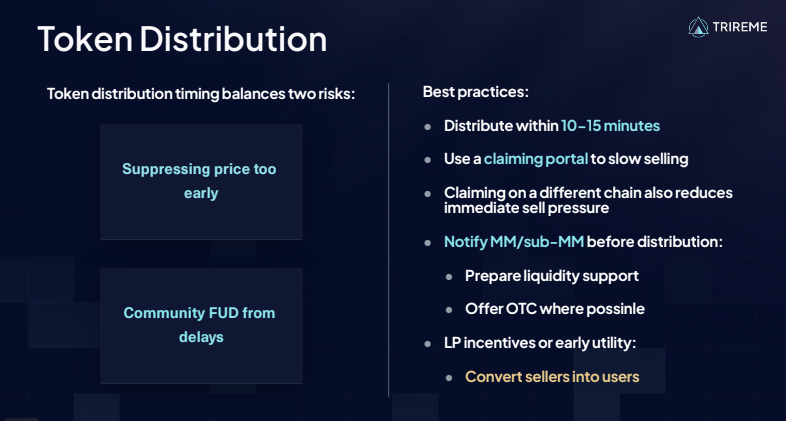
Best practices include:
- Controlled distribution timing
- Use of claiming systems to slow sell pressure
- Coordination with market makers
- Liquidity support mechanisms
Early incentives can convert sellers into long-term participants.
Timing Announcements (Post-Launch)
Selling will happen.
Momentum must be rebuilt.
Catalysts should be deployed both before launch and after initial sell pressure subsides.
Examples include:
- New exchange listings
- Product updates
- Strategic partnerships
Proper timing can reignite volume, support recovery, and sustain interest.
Should You Launch in an Uncertain Market?
Short answer: Yes, projects do launch in uncertain markets, but it’s not always the best time, and most teams misunderstand when uncertainty is actually an advantage.
Let’s be real and strategic about it.
In fact, many strong projects intentionally launch during uncertainty.
Why?
Because:
- Competition for attention is lower
- Valuations are more grounded
- Short-term hype is weaker, so quality stands out
But this only works if the project is structurally prepared.
Is It the Best Time to Launch?
It depends on what you’re optimizing for.
If you want:
Maximum hype + highest FDV → NO
- Bull markets are better
- Retail flow is strong
- Multiples expand quickly
If you want:
Stronger foundation + long-term positioning → YES
- More disciplined capital
- Better holder quality
- Less speculative noise
The Real Truth Most Founders Ignore
Uncertain markets don’t kill launches.
Weak structure does.
In uncertain conditions:
- Liquidity is thinner
- Buyers are more selective
- Sell pressure hits harder
Which means:
- Bad tokenomics get exposed immediately
- Poor sequencing gets punished faster
- Weak demand collapses quickly
When It Actually Makes Sense to Launch
Launching in uncertainty works if:
1. You have real demand
Not just marketing. Actual users, traction, or strong narrative positioning.
2. Your tokenomics can survive pressure
- Controlled unlocks
- Balanced distribution
- No immediate oversupply
3. You can manage liquidity properly
- Strong market making
- Deep enough order books
- Controlled volatility
4. You have a catalyst roadmap ready
Not just one announcement.
A sequence.
When You SHOULD NOT Launch
Be honest, most projects should delay if:
- Tokenomics are not stress-tested
- GTM is not clear
- No real user base yet
- Relying purely on exchange hype
- No post-TGE plan
Because in uncertain markets:
You don’t get a second chance.
Strategic Insight (This Is the Real Edge)
The best teams don’t ask:
“Is the market good?”
They ask:
“Are we strong enough for this market?”
Conclusion
In uncertain markets, execution becomes more visible.
Weak structures break faster.
Strong structures endure.
Token launches are no longer about attention.
They are about coordination.
The projects that succeed are not the ones that generate the most noise.
They are the ones that prepare the most.
Where Trireme Comes In
Most teams understand the components of a strong launch.
Very few know how to align them under real market conditions.
This is where execution breaks.
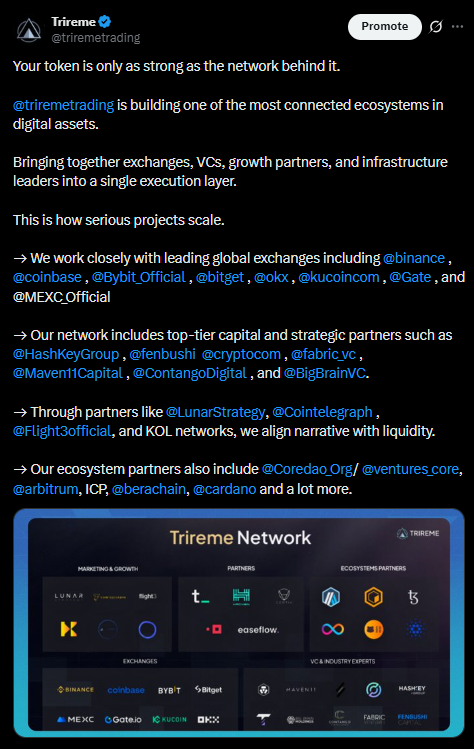
Trireme operates at the intersection of:
- Tokenomics design
- Market structure
- Liquidity engineering
- Exchange strategy
- Catalyst planning
We help projects move from isolated decisions to a unified system.
From designing token models to preparing for real order books. From planning launches to managing live market behavior.
Because the market does not evaluate intentions.
It evaluates performance under pressure.
In uncertain markets, the difference is not who launches.
It is who is prepared to sustain.
@triremetrading works with projects that are building for longevity, not just visibility.